

Berlin, Germany’s capital
Details
Accessibility
https://www.visitberlin.de/en/accessible-berlin
https://www.berlin.de/en/tourism/travel-information/1730823-2862820-accessibility.en.html
"Berlin is a very accessible city, especially for public transport, with most buses, trams, and both underground (U-Bahn) and overground (S-Bahn) trains being wheelchair-friendly with lifts, ramps, and priority seating. While many main attractions are accessible, some individual older buildings and pavements may have steps or cobbles, and some services like taxis might be harder to find. Resources like the BVG website and the visitBerlin.de website offer detailed information on accessible routes and facilities.
- Buses: All buses are accessible, with drivers deploying a manual ramp when signaled. Most buses have a designated wheelchair space and priority seating, although priority seating is not always enforced by other passengers.
- Trams: All tram lines are equipped with barrier-free vehicles that have ramps and sufficient space.
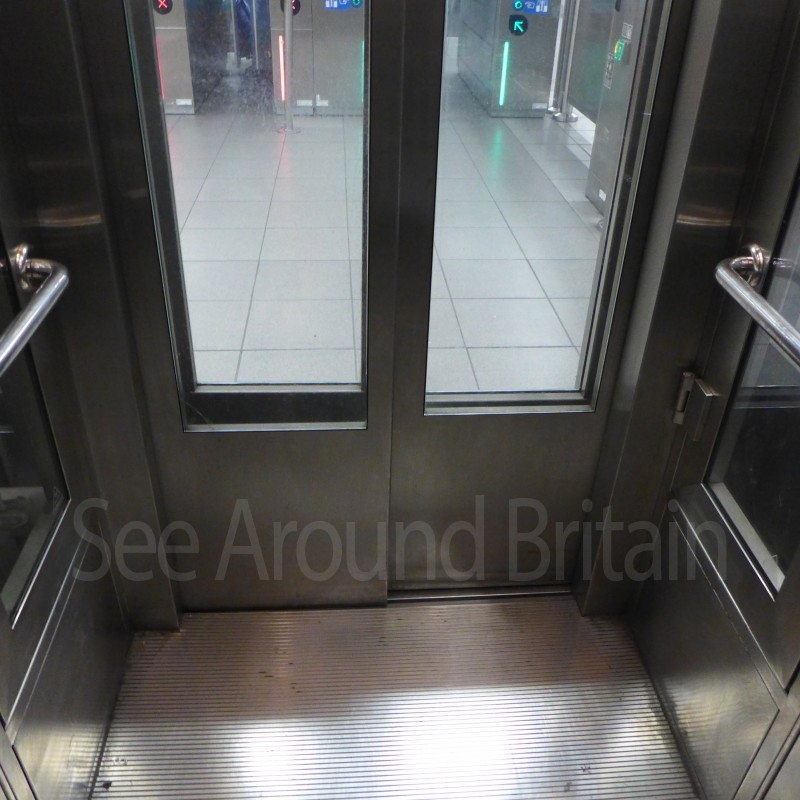
- U-Bahn (Underground) and S-Bahn (Overground): Both systems are largely accessible. Many stations feature lifts, and step-free access between platforms and trains is common. Newer subway trains are often at ground level.
- Taxis: Wheelchair-accessible taxis are not common, but public transport is a good alternative.
- App and Journey Planners: Use resources like the free accessBerlin app and the BVG or S-Bahn journey planners to find accessible routes online.
- Pavements: Pavements are often wide, but conditions vary. Some have lowered curbs, while others are cobbled or have high curbs, making them challenging in places.
- Bicycles: Be aware that many locals cycle on pavements, even with designated bike paths, which can pose a hazard.
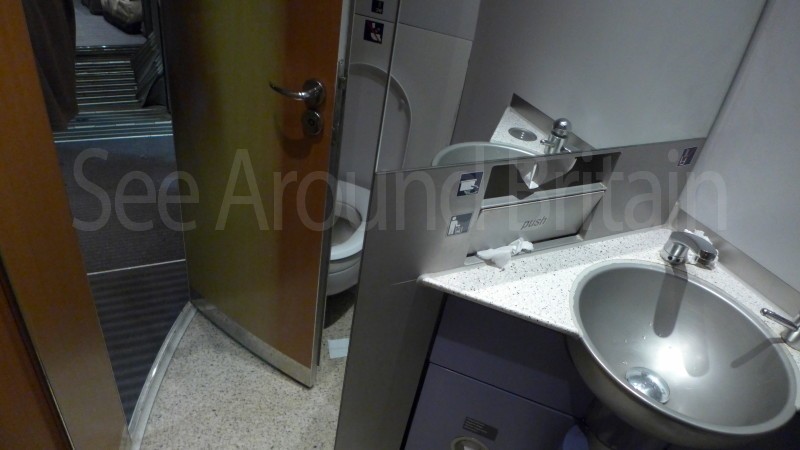
- Accessible Toilets: There are many accessible toilets throughout the city, often clean and well-equipped with grab rails and alarms.
- Attractions: Many museums, hotels, and restaurants are accessible or have reduced barriers. Some offer additional services like induction loops and accessible tours.
- Wheelchair Rental: Wheelchair rental services and designated accessible parking are available." https://www.youtube.com/shorts/4MXESeU2Fk8
Brief description
https://en.wikipedia.org/wiki/Berlin#
2025: "Berlin[a] is the capital and largest city of Germany, by both area and population.[10] With 3.7 million inhabitants,[5] it has the highest population within its city limits of any city in the European Union, and the fifth largest in Europe after Istanbul, Moscow, London and St Petersburg. The city is also one of the states of Germany, being the third-smallest state in the country by area. Berlin is surrounded by the state of Brandenburg, and Brandenburg's capital Potsdam is nearby. The urban area of Berlin has a population of over 4.6 million, making it the most populous in Germany.[6][11] The Berlin-Brandenburg capital region has around 6.2 million inhabitants and is Germany's second-largest metropolitan region after the Rhine-Ruhr region,[5] as well as the fifth-biggest metropolitan region by GDP in the European Union.[12]
Berlin was built along the banks of the Spree river, which flows into the Havel in the western borough of Spandau. The city includes lakes in the western and southeastern boroughs, the largest of which is Müggelsee. About one-third of the city's area is composed of forests, parks and gardens, rivers, canals, and lakes.[13]
First documented in the 13th century[9] and at the crossing of two important historic trade routes,[14] Berlin was designated the capital of the Margraviate of Brandenburg (1417–1701), Kingdom of Prussia (1701–1918), German Empire (1871–1918), Weimar Republic (1919–1933), and Nazi Germany (1933–1945). Berlin served as a scientific, artistic, and philosophical hub during the Age of Enlightenment, Neoclassicism, and the German revolutions of 1848–1849. During the Gründerzeit, an industrialization-induced economic boom triggered a rapid population increase in Berlin. 1920s Berlin was the third-largest city in the world by population.[15] After World War II and following Berlin's occupation, the city was split into West Berlin and East Berlin, divided by the Berlin Wall.[16] East Berlin was declared the capital of East Germany, while Bonn became the West German capital. Following German reunification in 1990, Berlin once again became the capital of all of Germany. Due to its geographic location and history, Berlin has been called "the heart of Europe".[17][18][19]
Berlin is a global city of culture, politics, media and science.[20][21][22][23] Its economy is based on high tech and the service sector, encompassing a diverse range of creative industries, startup companies, research facilities, and media corporations.[24][25] Berlin serves as a continental hub for air and rail traffic and has a complex public transportation network. Tourism in Berlin makes the city a popular global destination.[26] Significant industries include information technology, the healthcare industry, biomedical engineering, biotechnology, the automotive industry, and electronics. "
https://www.berlin.de/en/tourism/
Address
DDR Museum
Vera Britain Ufer
Karl-Liebknecht-Str. 1
10178 Berlin
Germany
Phone
tel:0302 327 5530
Website
https://en.wikipedia.org/wiki/Berlin#
Directions
Opening Times
Always check with the venue directly for up-to-date information including opening times and admission charges as they may be subject to change
Transport
https://www.berlin.de/en/public-transportation/
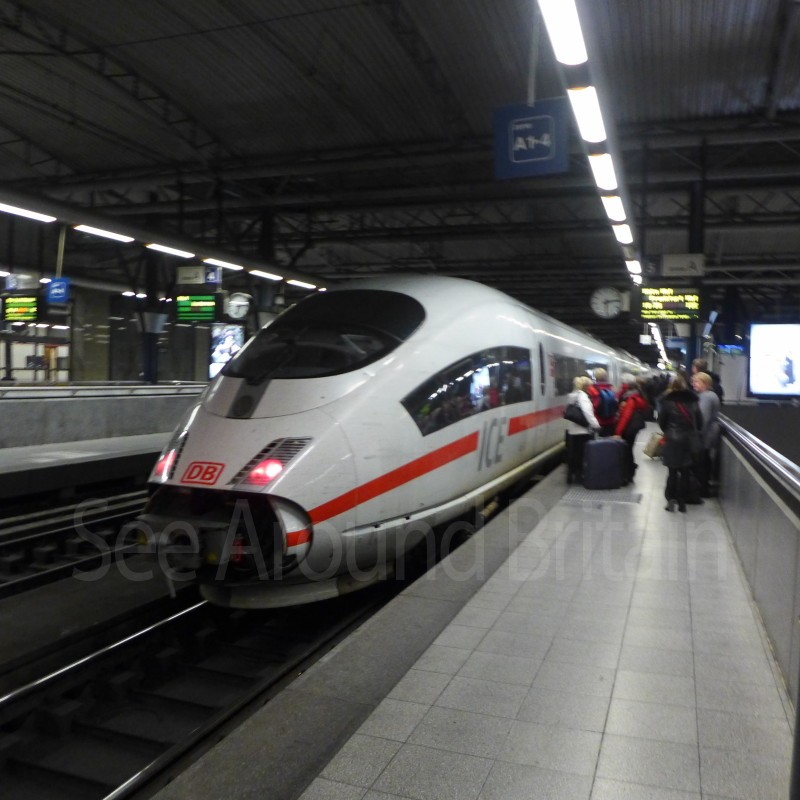
https://en.wikipedia.org/wiki/Deutsche_Bahn
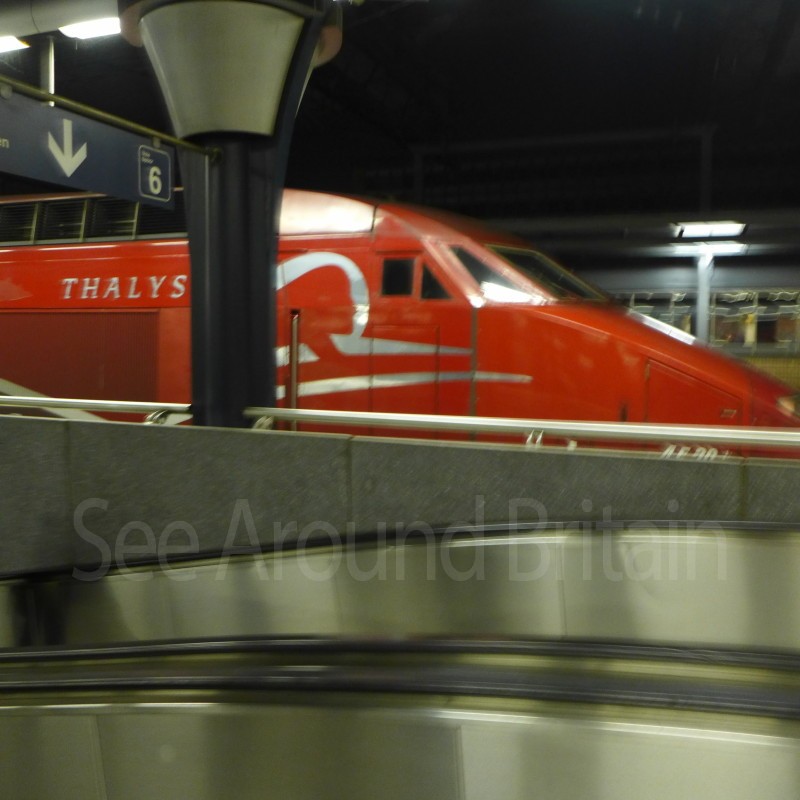
https://en.wikipedia.org/wiki/Thalys#Routes
https://en.wikipedia.org/wiki/Berlin#Transport
Amenities
https://www.berlin.de/en/tourism/
https://www.berlin.de/en/attractions-and-sights/
https://en.wikipedia.org/wiki/Berlin#
2025: "Berlin is home to several universities, such as the Humboldt University of Berlin, Technische Universität Berlin, the Berlin University of the Arts and the Free University of Berlin. The Berlin Zoological Garden is the most visited zoo in Europe. Babelsberg Studio is the world's first large-scale movie studio complex, and there are many films set in Berlin.[27] Berlin is home to three World Heritage Sites: Museum Island, the Palaces and Parks of Potsdam and Berlin, and the Berlin Modernism Housing Estates.[28] Other landmarks include the Brandenburg Gate, the Reichstag building, Potsdamer Platz, the Memorial to the Murdered Jews of Europe, and the Berlin Wall Memorial. Berlin has numerous museums, galleries, and libraries."
Location
Nearest Venues

*Distances are calculated in a straight line from the current venue, please allow extra time/distance based on available paths or roads.