

Bristol Old Vic, Bristol
Details
Accessibility
Accessible disability toilets.
https://bristololdvic.org.uk/your-visit/access/general-access-information
https://bristololdvic.org.uk/your-visit/access/access-registration
"Use this to tell us about the support you may need in advance of your visit or anything to do with accessibility: access@bristololdvic.org.uk 0117 987 7877
https://bristololdvic.org.uk/your-visit/access#entry:1366:url
"We want to make your visit to Bristol Old Vic as enjoyable and comfortable as possible, so we have provided you with detailed information regarding accessibility in all areas of the theatre.
If you have any questions, or to register on our Access Scheme to enable accessible seating, discounts and companion tickets, please do not hesitate to contact the Box Office (Mon–Fri, 12–6pm | Sat, 2.30pm–6pm) on 0117 987 7877 or email access@bristololdvic.org.uk
We are now working with Nimbus Disability, a Social Enterprise that has received international recognition for its Access Card Scheme. For more info on how to book access tickets online, take a look here."Brief description
https://en.wikipedia.org/wiki/Bristol_Old_Vic


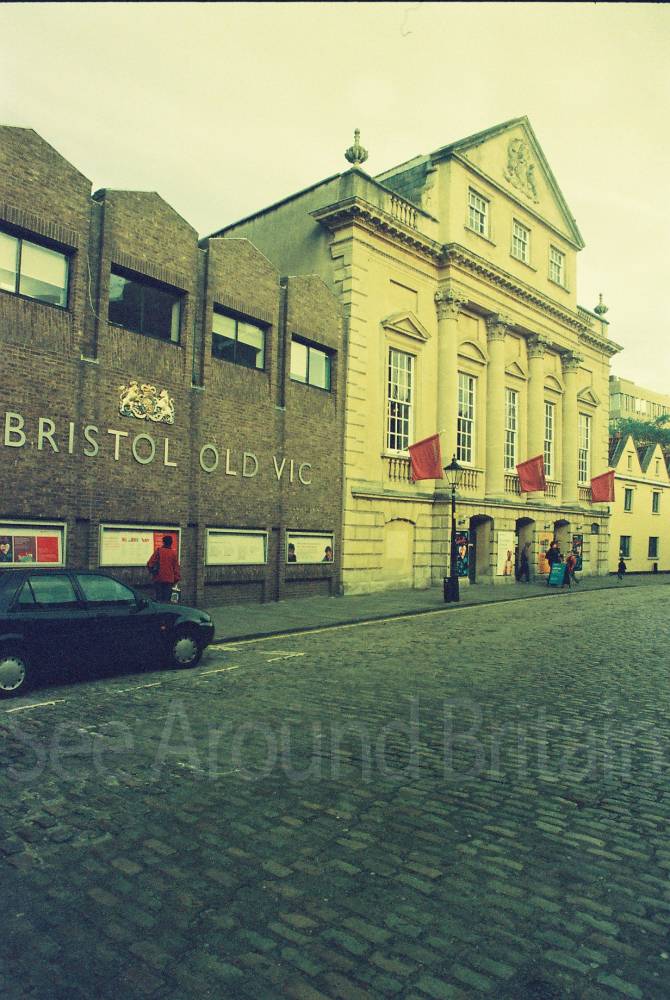
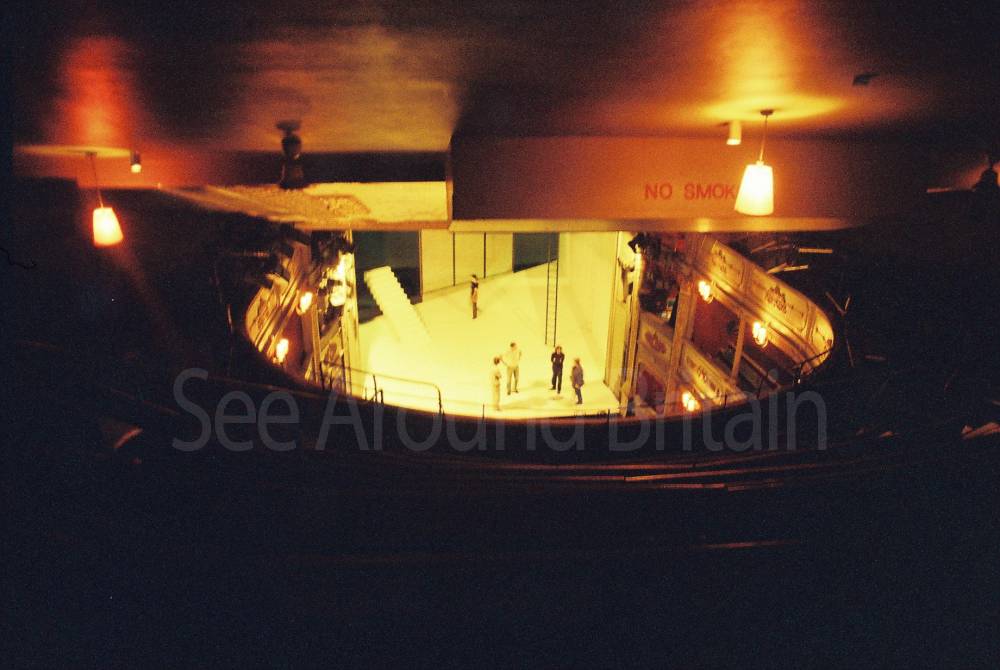
New and old exterior in 2019 Interior of the main theatre, 2008
2026: "Bristol Old Vic is a British theatre company based at the Theatre Royal, Bristol. The present company was established in 1946 as an offshoot of the Old Vic in London. It is associated with the Bristol Old Vic Theatre School, which became a financially independent organisation in the 1990s. Bristol Old Vic runs a Young Company for those aged 7–25.[1]
The Theatre Royal, the oldest continually-operating theatre in the English-speaking world, was built between 1764 and 1766 on King Street in Bristol.[2][3] The Coopers' Hall, built 1743–1744, was incorporated as the theatre's foyer during 1970–1972. Together, they are designated a Grade I listed building by Historic England.[4]Daniel Day-Lewis called it "the most beautiful theatre in England."[3]
In 2012, the theatre complex completed the first phase of a £19 million refurbishment, increasing the seating capacity and providing up to ten flexible performance spaces. Besides the main Theatre Royal auditorium, the complex includes the Studio theatre and the Side Stage, Paint Shop and Basement performance areas. Whilst the theatre was closed, the company continued to present work in the Studio and Basement spaces, as well as at other sites around Bristol. The Theatre Royal re-opened in 2012 with Wild Oats.
The theatre is situated on King Street, a few yards from the Floating Harbour. From 1972 until 2016, the public entrance was through the Coopers' Hall, the earliest surviving building on the site. The Coopers' Hall was built in 1744 for the Coopers' Company, the guild of coopers in Bristol, by architect William Halfpenny.[5] It has a "debased Palladian" façade with four Corinthian columns. It only remained in the hands of the Coopers until 1785, subsequently becoming a public assembly room, a wine warehouse, a Baptist chapel and eventually a fruit and vegetable warehouse.[6]
The theatre was built between 1764 and 1766.[4] The design of the auditorium has traditionally been taken to have been based, with some variations, on that of the Theatre Royal, Drury Lane in London.[7][8] Although Bristol architect Thomas Paty supervised construction, the theatre was built to designs by James Saunders, David Garrick's carpenter at Drury Lane.[9] Saunders had provided drawings for the theatre in Richmond, Surrey, built in 1765. A long section (1790, at Harvard University Theatre Collection) and a survey plan (1842, at the Local Studies Library) of the Richmond theatre show close similarities with the Bristol theatre in the proportions and in the relationship between the actors on stage and the spectators surrounding them on three sides.[10] The site chosen was Rackhay Yard, a roughly rectangular empty site behind a row of medieval houses and to one side of the Coopers' Hall. Two (and possibly three) new passageways built through the ground floor of the houses fronting King Street gave access to Rackhay Yard and the "New Theatre" inside it.[11]
In October 2010, there was a merger of the Old Vic and the Theatre Royal Bristol Trust, into a combined charity to be chaired by Laura Marshall, the managing director of Icon Films.[43]
 The Coopers' Hall served as the theatre's entrance from 1972 to 2016
A fundraising campaign for the £19 million planned refurbishment was assisted by appearances from, among others, Richard Briers, Stephanie Cole, Judi Dench, Prunella Scales, Timothy West and Patrick Stewart. £5.3 million was provided by the Arts Council.[44] During the closure the company staged productions in the Studio theatre, the Basement and in other locations around Bristol, including Sally Cookson's adaptation of Treasure Island on King Street in summer 2011 and Melly Still's revival of Coram Boy at the Colston Hall at Christmas 2011.[45]
The plan was for a flexible theatre complex, where up to ten areas are available for performance. Tom Morris has cited as inspiration the Théâtre des Bouffes du Nord in Paris. The main auditorium gained an optional thrust stage,[46] and an increase in seating to 540.[47] The Side Stage area was redeveloped, with additional capacity of 250, creating the option of a separate second auditorium. Other spaces redeveloped as performance areas included the Paint Shop and the rehearsal room.[46] The Theatre Royal re-opened in September 2012, with Wild Oats.
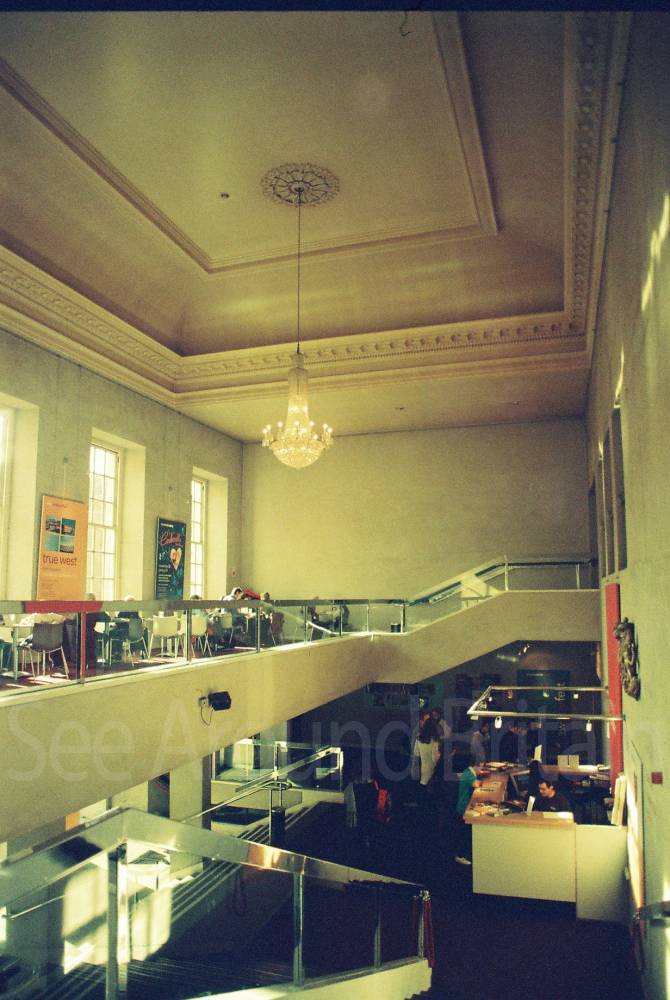
A further round of redevelopment, designed by architects Haworth Tompkins,[48] was undertaken between June 2016 and September 2018. The street side of the 1970s Peter Moro building, containing the Studio theatre (originally the New Vic), was demolished and replaced by a new foyer with bar and box office, which makes a feature of the previously hidden theatre walls. The Coopers' Hall was adapted to house new performance and event spaces, including a studio theatre in the barrel vaults in its basement.[49][50]"
Address
Bristol Old Vic
King Street
Bristol
BS1 4ED
tickets@bristololdvic.org.uk
Phone
Reception 0117 949 3993
Website
Directions
Opening Times
Always check with the venue directly for up-to-date information including opening times and admission charges as they may be subject to change
Transport
Amenities
Baby changing facilities.
Travel Information
For further travel information please see: www.traveline.info
Or call Traveline on 0871 200 22 33
(Calls cost 12p per minute plus your phone company's access charge)
Location
Nearest Venues

245 metres*


276 metres*

337 metres*

*Distances are calculated in a straight line from the current venue, please allow extra time/distance based on available paths or roads.