

Lisbon, Portugal, Europe
Details
Accessibility
https://www.visitportugal.com/en/search/site/Accessibility
Brief description
https://en.wikipedia.org/wiki/Lisbon
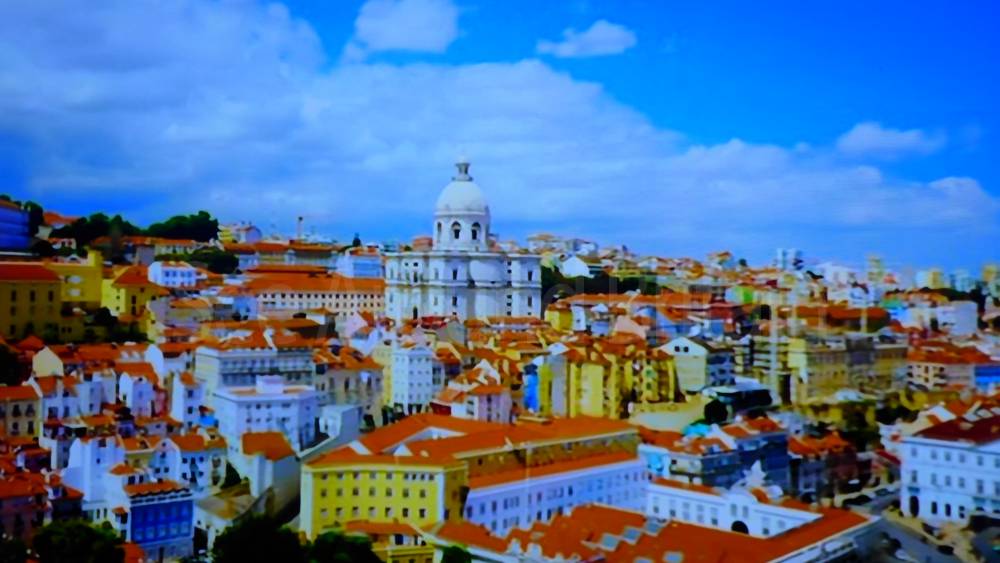
2025: "Lisbon (/ˈlɪzbən/ ⓘ LIZ-bən; Portuguese: Lisboa [liʒˈβoɐ] ⓘ)[4] is the capital and most populous municipality of Portugal, with an estimated population of 575,739, as of 2024, within its administrative limits[5][6] and 3,028,000 within the metropolis, as of 2025.[7] Lisbon is mainland Europe's westernmost capital city (second overall after Reykjavík), and the only one along the Atlantic coast,[8] the others (Reykjavík and Dublin) being on islands. The city lies in the western portion of the Iberian Peninsula, on the northern shore of the River Tagus. The western portion of its metro area, the Portuguese Riviera, hosts the westernmost point of Continental Europe, culminating at Cabo da Roca.
Lisbon is one of the oldest cities in the world[9] and the second-oldest European capital city (after Athens), predating other modern European capitals by centuries.[10] Settled by pre-Celtic tribes and later founded and civilized by the Phoenicians, Julius Caesar made it a municipium called Felicitas Julia,[11] adding the term to the name Olissipo. After the fall of the Roman Empire, it was ruled by a series of Germanic tribes from the 5th century, most notably the Visigoths. Later it was captured by the Moors in the 8th century. In 1147, Afonso Henriques conquered the city and in 1255, it became Portugal's capital, replacing Coimbra.[12] It has since been the political, economic, and cultural centre of the country.
As the political centre of the country, Lisbon hosts the government, National Assembly, Supreme Court of Justice, Armed Forces and residence of the head of state. It is also the centre of Portuguese diplomacy, with ambassadors from 86 countries residing in the city, as well as representations from Taiwan and Palestine.[13] About 3.01 million people live in the Lisbon metropolitan area, which extends beyond the city's administrative area, making it the third largest metropolitan area in the Iberian Peninsula (after Madrid and Barcelona) as well as figuring amongst the 10 most populous urban areas in the European Union.[14][15] It represents approximately 28% of the country's population.
Lisbon is recognised as an alpha− level global city because of its importance in finance, commerce, fashion, media, entertainment, arts, international trade, education, and tourism.[16][17] Lisbon is amongst the two Portuguese cities (the other being Porto) to be recognised as a global city, and it is also home to three companies in the Global 2000 (EDP Group, Galp Energia and Jerónimo Martins).[18][19][20] Lisbon is one of the major economic centres in Europe, with a growing financial sector, with PSI-20 being part of Euronext, the largest center for debt and funds listings in the world. The Lisbon region has a higher GDP PPP per capita than any other region in Portugal. Its GDP PPP amounts to US$179 billion and thus $61,713 per capita.
The city occupies the 40th place of highest gross earnings in the world and, with almost 21,000 millionaires, is the 11th European city by number of millionaires and the 14th by number of billionaires.[21][22] Most of the headquarters of multinational corporations in Portugal are located in the Lisbon area.[23] "
https://en.wikipedia.org/wiki/Lisbon#Culture
"The city of Lisbon is rich in architecture; Romanesque, Gothic, Manueline, Baroque, Modern and Postmodern constructions can be found all over Lisbon. The city is also crossed by historical boulevards and monuments along the main thoroughfares, particularly in the upper districts; notable among these are the Avenida da Liberdade (Avenue of Liberty), Avenida Fontes Pereira de Melo, Avenida Almirante Reis and Avenida da República (Avenue of the Republic).
Lisbon is home to numerous prominent museums and art collections, from all around the world. The National Museum of Ancient Art, which has one of the largest art collections in the world, and the National Coach Museum, which has the world's largest collection of royal coaches and carriages, are the two most visited museums in the city. Other notable national museums include the National Museum of Archaeology, the Museum of Lisbon, the National Azulejo Museum, the National Museum of Contemporary Art, and the National Museum of Natural History & Science.
Prominent private museums and galleries include the Gulbenkian Museum (run by the Calouste Gulbenkian Foundation, one of the wealthiest foundations in the world), which houses one of the largest private collections of antiquities and art in the world, the Contemporary Art Museum - Centro Cultural de Belém, the Museum of Art, Architecture and Technology, and the Museum of the Orient. Other popular museums include the Electricity Museum, the Ephemeral Museum, the Museu da Água, and the Museu Benfica, among many others.
Lisbon's Opera House, the Teatro Nacional de São Carlos, hosts a relatively active cultural agenda, mainly in autumn and winter. Other important theatres and musical houses are the Centro Cultural de Belém, the Teatro Nacional D. Maria II, the Gulbenkian Foundation, and the Teatro Camões."https://www.visitportugal.com/en/destinos/lisboa-regiao
" Lisbon is Portugal's capital and the hub of a multifaceted area that appeals to different tastes and senses.
In a city that has been influenced by many different far-off cultures over time, there is still a village feel in each historic neighbourhood. Stroll through the Pombaline grid of streets in the Baixa district that opens on to the Tagus in Praça do Comércio, then follow the river to discover some of the city’s most beautiful parts: the monumental area of Belém with its World Heritage monuments, the mediaeval quarters and the latest contemporary leisure spaces, such as the Parque das Nações.
If you continue to the mouth of the river, you'll understand why we say that Lisbon is the centre of a vast resort. Along the coastal road you’ll find beaches and beach resorts that combine villas and hotels from the beginning of the 20th century with marinas, terraces and excellent golf courses. Further along the coast you’ll come across world-renowned surfing beaches, but also the palaces scattered across the cultural landscape of Sintra, a World Heritage Site.
The wide variety of landscapes and heritage is always close by, whether to the north or south of the capital. With beaches, natural parks, cultural routes and accommodation for all tastes, it is hard to escape the Lisbon region on a visit to Portugal."
Address
Castelo de São Jorge
R. de Santa Cruz do Castelo
1100-129 Lisboa
Portugal
+ https://www.visitportugal.com/en/encontre-tipo?context=397
+ Tourist Offices
Telephone: +351 236 480 150
Fax: +351 236 480 159
E-mail: turismo@cm-pedrogaogrande.pt ; geral@turismodocentro.pt
Website: http://www.turismodocentro.pt
Phone
+351 236 480 150
Website
https://www.visitportugal.com/en
http://www.visitcentrodeportugal.com.pt
Directions
Opening Times
Always check with the venue directly for up-to-date information including opening times and admission charges as they may be subject to change
Transport
https://en.wikipedia.org/wiki/Lisbon#Transport
2025: "The Lisbon Metro connects the city centre with the upper and eastern districts, and also reaches some suburbs that are part of the Lisbon metropolitan area, such as Amadora and Loures. It is the fastest way to get around the city and it provides a good number of interchanging stations with other types of transportation. From the Lisbon Airport station to the city centre it may take roughly 25 mins. In 2019, the Lisbon Metro served around 173 million passengers (and 475.000 daily). As of 2018, the Lisbon Metro comprises four lines, identified by individual colours (blue, yellow, green and red) and 56 stations, with a total length of 44.2 km. Several expansion projects have been proposed, the most recent being the transformation of the Green Line into a circular line and the creation of two more stations (Santos and Estrela).
Trams
The tram is a traditional form of public transport in Lisbon. Introduced in 1901, electric trams were originally imported from the US,[172] and thus called the americanos (Portuguese for "American"). Today these trams are called elétricos (literally meaning electric ones).
Other than on the modern Line 15, the Lisbon tramway system still employs small (four-wheel) vehicles of a design dating from the early twentieth century. These distinctive yellow trams are one of the tourist icons of modern Lisbon, and their size is well suited to the steep hills and narrow streets of the central city.[173][174]
The earliest trams can still be seen in the Museu da Carris (the Lisbon Public Transport Museum).
The line has now a total length of 31 kilometers operating on 6 lines, down from a maximum of 76 kilometers for 27 lines. The slow decline of the network began with the construction of the Lisbon Metro and the expansion of the bus system.[175] Starting in 2017 the system has been expanded and new vehicles are being progressively added, aiming at expanding significantly the current tramway system.[176][177][178] There are currently 64 trams in operation in Lisbon and, during 2023-2026, 35 more will be added (Of which 10 will be "Historical models").[179][180][181][182]
Trains
There are four commuter train lines departing from Lisbon: the Sintra, Azambuja, Cascais and Sado lines (operated by CP – Comboios de Portugal), as well as a fifth line to Setúbal (operated by Fertagus), which crosses the Tagus river via the 25 de Abril Bridge. The major railway stations are Santa Apolónia, Rossio, Gare do Oriente, Entrecampos, and Cais do Sodré.
Buses
The local bus service within Lisbon is operated by Carris. Carris' fleet includes 741 buses and, in the period 2023-2026, other 342 buses will be added so as to increase the public transportation system reach.[183][182] The bus network has a length of 748 km comprising 99 bus routes.[184] Major investments have been made in recent years: for instance, in 2017 there were 600 buses operating on 674 km and 75 routes: 141 buses, 74 kilometers and 24 bus routes were added in 2018-2022.[185]
Outside Lisbon, there are two main commuter bus services connecting the cities outside Lisbon amongst them and to Lisbon: Carris Metropolitana,[186] a brand operated by 4 companies, all operating inside the Lisbon Metropolitan Area, and Barraqueiro Transportes[187] (with 4 brands operating outside the Metropolitan Area with services to Lisbon), which operate from different terminals in the city.
Bridges
The city is connected to the far side of the Tagus by two important bridges:
- The 25 de Abril Bridge, inaugurated (as Ponte Salazar) on 6 August 1966, and later renamed after the date of the Carnation Revolution, was the longest suspension bridge in Europe.[188]
- The Vasco da Gama Bridge, opened on 29 March 1998 is, at 17.2 km (10.7 mi), the longest bridge in Europe.[189]
The foundations for a third bridge across the Tagus have already been laid, but the overall project has been postponed due to economic crisis that affected Portugal, and other bureaucratic and political reasons.[190][191]
Another way of crossing the river is by taking the ferry.[192] The operator Transtejo & Soflusa,[193] runs to different locations from within the city: Cacilhas, Seixal, Montijo, Porto Brandão and Trafaria under the brand Transtejo and to Barreiro under the brand Soflusa. Ferry stations in Lisbon include Belém Station, Terreiro do Paço River Station and Cais do Sodré River Station."
Amenities
https://www.visitportugal.com/en/NR/exeres/F10522EA-0F19-40CF-ADC9-28D6A8C6E9D7
" Lisbon of Discoveries:
Of all Lisbon, Belém, Belém most clearly evokes the era of the Discoveries and Portugal´s maritime expansion. It was from Belém that caravels would depart and arrive throughout the 15th and 16th centuries. King Manuel I ordered the construction of the Monastery of Jerónimos (Hieronymos) and the Tower of Belém as symbols of the wealth and splendour of the times. Classified as World Heritage, they are among the very best examples of the "Manueline" architectural style; a Portuguese interpretation of the gothic. In the buildings that used to serve the monastery, there is now the National Museum of Archaeology and the Naval Museum including exhibits explaining and demonstrating the navigation techniques developed by the Portuguese for their voyages of exploration.
In the 18th century, King João V chose to transfer the royal residence to Belém. This subsequently involved the restoration of the Palace and constructing stables. The latter have now been turned into the National Coach Museum with the "pink" palace converted into the President of the Republic´s official residence.
In 1940, on the grounds of commemorating the founding of the Portuguese nation, the Salazar regime decided to hold an "Exposition of the Portuguese World". This resulted in substantial changes being made to Belém including the creation of the Praça Afonso de Albuquerque, in honour of the first Vice-Roy of India, the Praça do Império (Empire Square), the Monument to the Discoveries and walkways and leisure facilities along the river.
The Church of Memória (Memory), the Chapel of São Jerónimo (Saint Jerome), the Tropical Gardens, the Belém Cultural Centre and the Museum of Ethnology complete the range of attractions contained in this district.
Nowadays, neither the port nor the beach of ´Discoveries´ remain but instead there is a most pleasant leisure and cultural space which is an extremely popular destination for Lisboners when out strolling. No visit to Belém would be complete without stopping off in the Casa dos Pastéis de Belém, (Belém Pastry Shop) which has been producing this sweet delicacy for well over one hundred years."
+ https://www.visitportugal.com/en/experiencias/arte-e-cultura
"The land that is now Portugal has been inhabited for thousands of years and its national boundaries have been defined for eight centuries. This long history is reflected in a particular culture that is the result of the mixture of the many peoples who settled here and those that the Portuguese encountered on their journeys of Discovery.
It is found in the villages and towns, in the monuments and traditions, which bring together influences that the Portuguese have applied creatively. And the omnipresent sea has also shaped our personality and taken us beyond the continent of Europe, enabling us to learn and share with the rest of the world."