

Llansamlet, Swansea, SA7 9RN: Open daily. Free entry.


Details
Accessibility:
Some road side parking in places alone back roads and outside of shopping outlets. Tarmac and concrete pavements line most roads.
Amenities:In the local area you will find petrol station, Train station, Spar stores, library, pubs and various takeaways.
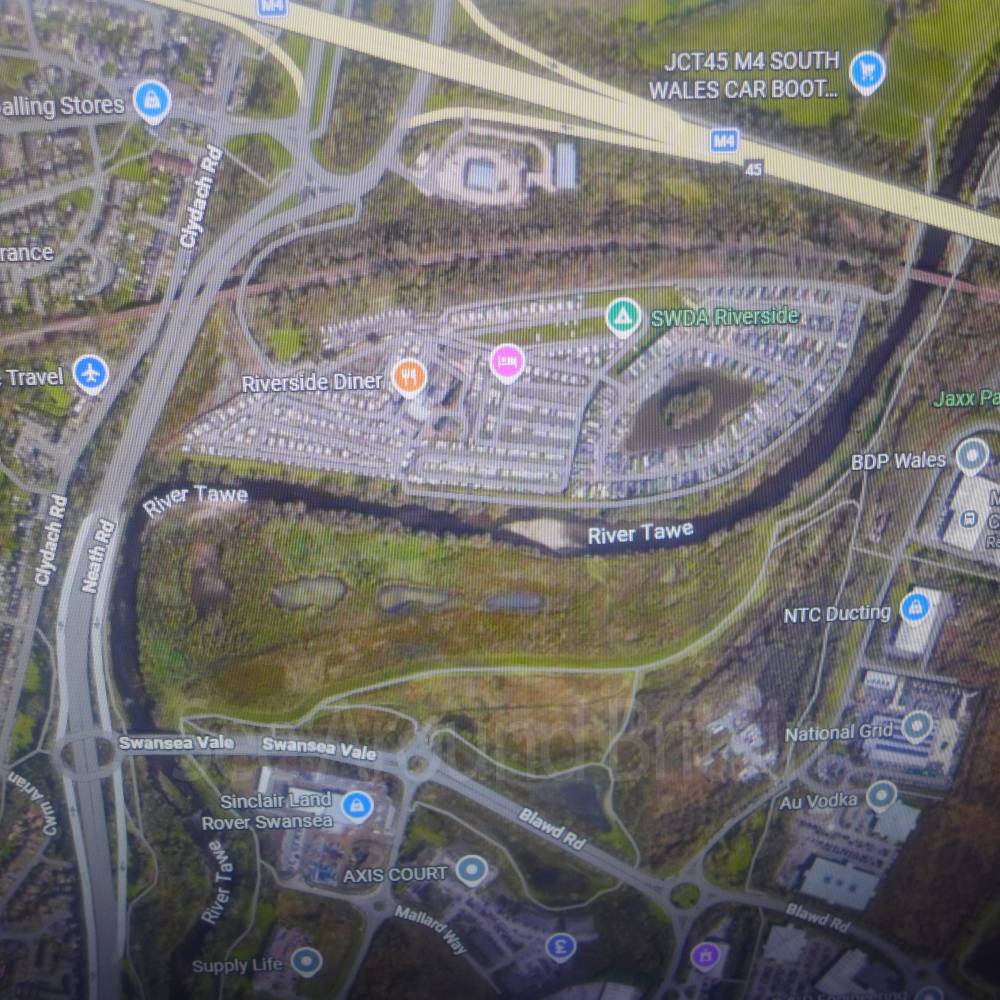
Brief Description:A suburban district of Swansea. Llansamlet was an important mining area from the 14th century. Much of the former mining area is now occupied by the Swansea Enterprise Park.
https://en.wikipedia.org/wiki/Llansamlet# 2026:
"Llansamlet is a suburban district and community of Swansea, Wales, falling into the Llansamlet ward. The area is centred on the A48 road (named Samlet Road and Clase Road in the area) and the M4 motorway.
Like other places in Wales having a name beginning with Llan, Llansamlet is named after a church, usually itself bearing the name of a saint – in this case, the church of Saint Samlet. There is a Saint Samlet's Church in the area on Church Road.
Llansamlet was an important coal mining area from at least the 14th century. Initially coal was mined for export. However, with the coming of the copper industry in the 18th century, much of the output was used for smelting purposes. In 1750 the principal mineral properties were acquired by Chauncy Townsend and they remained in his family until his great-grandson, Charles Henry Smith, relinquished them in 1872. By this time the best seams had been worked out and output was in decline. Coal-working finally ceased in the first half of the 20th century. Much of the former mining area is now occupied by the Swansea Enterprise Park.
 Engine house at Scotts Pit
One of the few surviving remains of the coal industry is Scotts Pit. The pit has a Cornish-style pumping engine house. Its construction can be dated to about 1823/1824. John Scott, the owner of the colliery, was a London solicitor who had taken a lease of the property in 1816. Coal was produced from 1819. In the same year, a locomotive was supplied by George Stephenson; however, it did not prove successful, and was soon withdrawn.[3] Scott was unable to operate the pit profitably and pulled out in 1828.[4] The pit then reverted to Charles Henry Smith. It continued in use, sometimes for coal winning, sometimes for pumping, until 1930. It was restored in the 1970s. It is often stated that the pit was sunk in the 1770s by a Captain John Scott, but there is no truth in this: it probably derives from a garbled oral tradition.[5]
Today the area consists of an urban belt centred on the A48 road and M4 motorway where new housing was built in the early 2000s. At the west of the area lies the Swansea Enterprise Park and Swansea Vale development area. The north of the area is mainly rural, consisting of farmland.
Road transport links include the A48 trunk road to the M4 motorway (Junction 44). It has its own railway station to the east, served by the Transport for Wales Rail Swanline service between Cardiff and Swansea.
The railway runs through a cutting, designed by Isambard Kingdom Brunel. After a landslip when the line opened in 1850, Brunel designed four flying arches to hold the cutting walls apart. For extra stability, these arches were ballasted with high mounds of copper slag, an easily available waste product from the local copper industry in the Lower Swansea Valley.[6] The four arches were completed in 1855 [7] and are now Grade II listed structures."
Further Information:
Address:
Llansamlet, Swansea, SA7 9RN.
Email:
None available.
Phone:None available.
Website:
http://www.genuki.org.uk/big/wal/GLA/Llansamlet/
Opening Hours:
Open daily.
Directions:
Situated 5.2 miles E of Neath via A465 – M4 and Walter Road. OS SS 686978.
Transport:
For further travel information in Wales please see: www.traveline.cymru/travel-info
Or call Traveline Cymru on 0800 464 0000
Travel Information
For further travel information in Wales please see: www.traveline.cymru/travel-info
Or call Traveline Cymru on 0800 464 0000
Location
Nearest Venues

Llansamlet Church: Open daily. Free entry.
156 metres*

Clarion Close Enterprise Park, Swansea SA6 8QZ
396 metres*

*Distances are calculated in a straight line from the current venue, please allow extra time/distance based on available paths or roads.