

Museum of London and the London Wall, London; venue now closed pending its move to Smithfield Market
Details
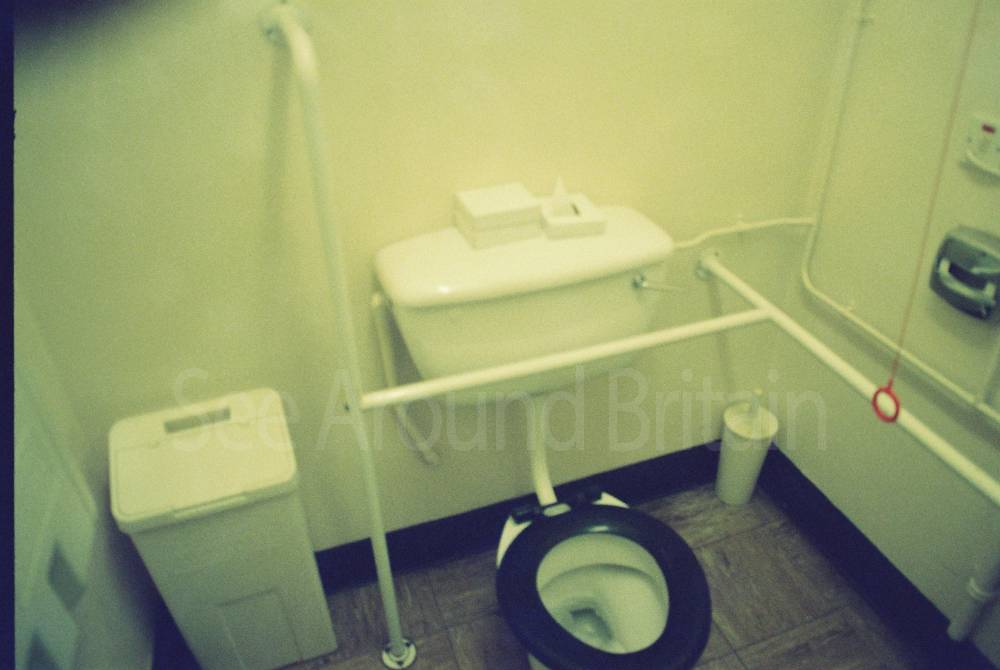
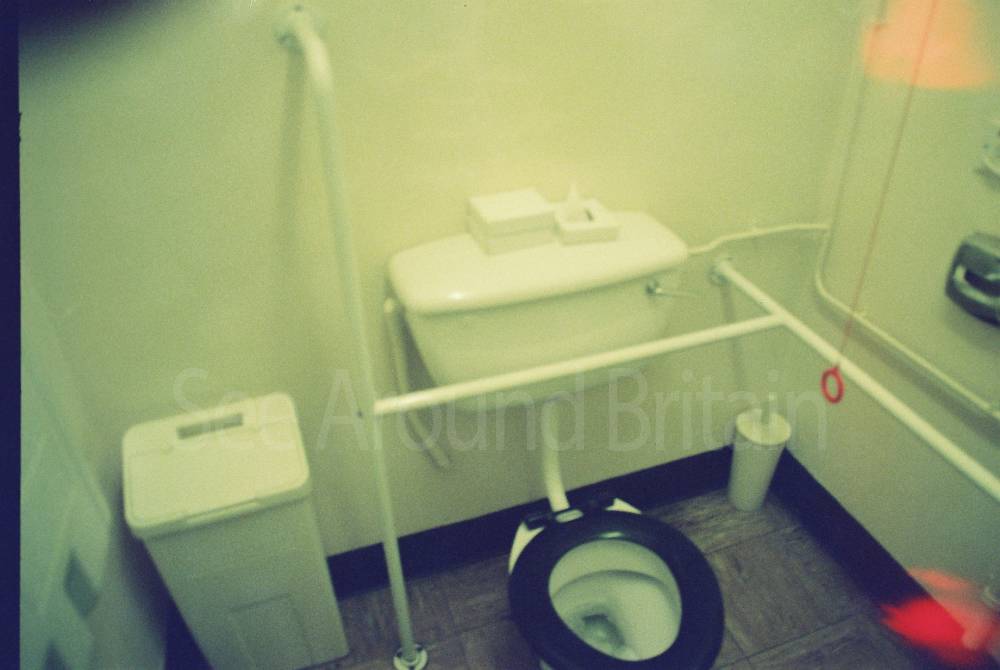
Accessibility
Brief description
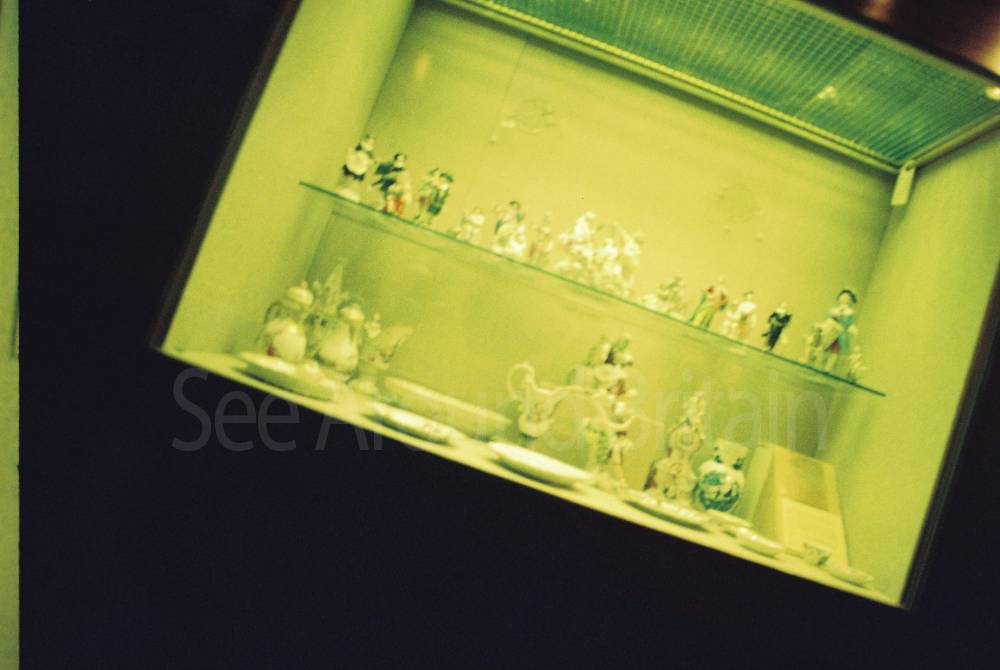
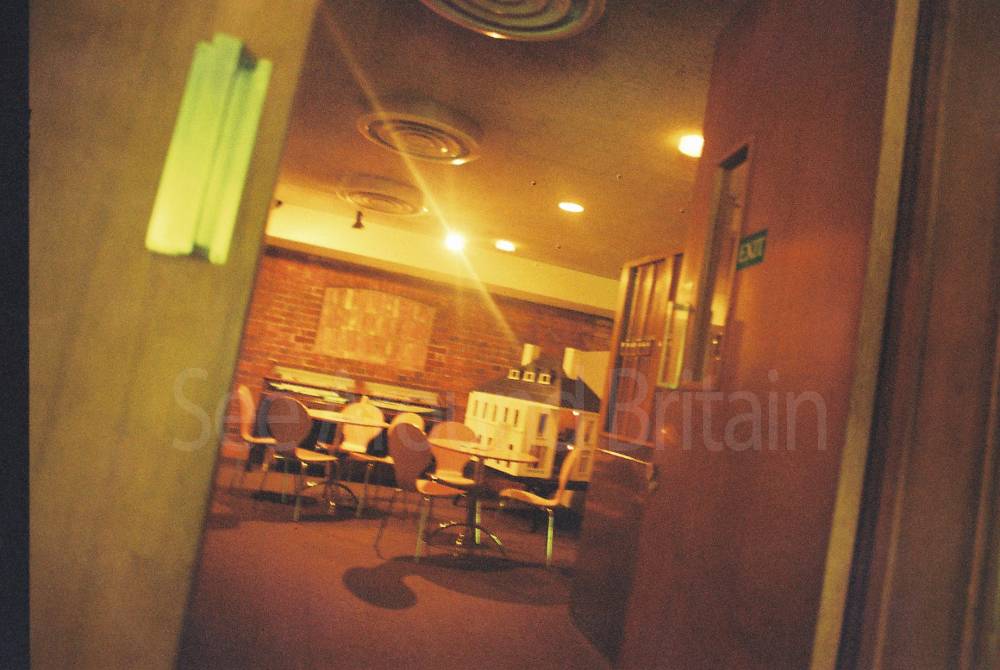
Our photographs show the collection when housed at 150 London Wall, Barbican
https://en.wikipedia.org/wiki/London_Museum
2025: "Museum of London (1976–2022)
 The Museum of London building at 150 London Wall, Barbican, now closed ahead of the museum's move to Smithfield
 Union (Horse with Two Discs), a public sculpture by Christopher Le Brun outside the main entrance to the former Barbican site
The new site for the museum was at the corner of London Wall and Aldersgate Street, an area that had almost entirely been flattened by bombing in The Blitz. The architects appointed to oversee the construction of the new museum building were Philip Powell and Hidalgo Moya, who designed a complex with four main parts: a tower block containing offices and not open to the public; two floors of exhibition space arranged around a courtyard; a lecture theatre and education wing; and a rotunda containing a small garden and restaurant. With the museum galleries themselves, Powell and Moya adopted an innovative approach to museum design, whereby the galleries were laid out so that there was only one route through the museum – from the prehistoric period to the modern galleries. As in the previous incarnation of the museum, the galleries would be set out in a roughly chronological order.[15] The building also incorporated a viewing window out onto one of the remaining pieces of London's city wall, originally built by the Romans around three sides of the city. Construction began in April 1971, with the foundation stone laid by the Queen Mother on 29 March 1973, and the museum was opened in December 1976 by Queen Elizabeth II as part of the Barbican Estate.[16]
As in the London Museum, visitors entered a series of rooms set out in chronological order, moving anti-clockwise around the main courtyard on the upper floor through London's history up to the Great Fire in 1666, and then descending to the lower level and moving clockwise around the courtyard up to the present day. Visitors would finish their visit by the Lord Mayor of London's State Coach.[17]
London Museum (future)
 The interior of one of the Smithfield Market buildings that will be occupied by the museum on its new site
In 2016, the museum announced it would be closing its London Wall site and moving to a set of disused market buildings in West Smithfield in 2021.[23] The new site will increase the museum's size from 17,000 square metres to over 27,000.[24] Museum director Sharon Ament said that one reason for the move was "a failing building with problematic entrances and a location which is difficult to find". A competition was held to find an architectural firm to design the new building, with over 70 firms taking part. Six were shortlisted, and their initial designs released to the public in 2016.[25] Stanton Williams and Asif Khan were chosen as the final architects.
The site at Smithfield includes part of the Thameslink train line running into Farringdon Station, and from an early point in the process, the museum expressed interest in creating a see-through section of tunnel for commuters to glimpse inside the museum and visitors to see the train go by.[26] It also includes the River Fleet, a tributary of the Thames which has long since become buried underground due to the high volume of construction work around it. One early plan for the new museum, since scrapped, included creating a well reaching down to the Fleet, which has been completely covered since the 1870s. Another idea for the new museum is to revive the ancient St Bartholomew's Fair, which took place on the site regularly in the medieval period until being shut down by authorities in 1855. The museum will also feature spiral escalators taking visitors to the underground storage rooms which will function as the main historical galleries.[27]
In 2019, further plans were released, which showed late-night queues outside the museum frontage and visitors perusing real items from the museum's collection. Ament announced that workers had found the remains of a Victorian café called the Temperance Cocoa Room, complete with original tiling, and that the museum intended to re-open this section as a café.
The scheme was originally set to cost £250 million and open in 2021; current estimates are that it will cost £337 million and open in 2026. Ament blamed the rising cost on the difficulty of working with an old building: "It is to do with things like waterproofing a building that hasn't needed to be water-proofed, it is to do with engineering".[28]
In August 2022, the museum announced that a previously unknown freshwater spring had been found underneath the new site. Tests revealed that it was safe to drink, and Ament claimed that she hoped visitors would be able to "fill up their water bottles from it".[29]
On 4 December 2022, the museum closed its site at London Wall ahead of the move. It was also announced that when the new site opened in 2026, it would be called the London Museum.[30]
Once the museum has vacated the London Wall site, it will revert to the City of London Corporation. In 2019, plans were revealed to use the site to house a London Centre For Music, a £288m concert hall for use by the London Symphony Orchestra.[31] However, in 2022, the Corporation submitted plans to demolish the building, including the Bastion House office block above, and replace it with a 780,000 sq. ft office block, citing dangerous structural issues, poor energy performance, fire safety and limited possible uses as reasons in favour of demolition.[32] In May 2024, demolition remained the likely option after the Secretary of State for Levelling Up, Housing and Communities Michael Gove decided not to intervene,[33] and in November 2024 Historic England issued a Certificate of Immunity from Listing, guaranteeing that the building would not be statutorily listed within the next five years.[34]"
See https://seearoundbritain.com/venues/smithfield-market-london
Address
Was at 200 Aldersgate St, Barbican, London EC1A 4HD
Will be at Smithfield Market, Grand Avenue, London EC1A 9PS See https://seearoundbritain.com/venues/smithfield-market-london
Phone
Website
https://www.facebook.com/museumoflondon/
https://www.bbc.co.uk/news/articles/c5y5w1ldz8do
Directions
Opening Times
Always check with the venue directly for up-to-date information including opening times and admission charges as they may be subject to change
Transport
Amenities
Travel Information
For further travel information please see: www.traveline.info
Or call Traveline on 0871 200 22 33
(Calls cost 12p per minute plus your phone company's access charge)
NB London ULTRA-LOW EMISSION ZONE
This started on 8 April 2019 in the Central London Congestion Charge Zone, and will extend to the whole of the London area within the
M25 Motorway from 25 October 2021.
For more details please see:
https://tfl.gov.uk/modes/driving/check-your-vehicle-35896
Vehicles registered with a 'disabled' or 'disabled passenger vehicles' tax class will benefit from a grace period after the ULEZ starts until 26 October 2025 as long as their vehicle doesn't change tax class, and this also applies to a 'disabled' vehicle registered outside the UK.
Location
Nearest Venues


154 metres*

St Giles' Church, Cripplegate, London
219 metres*
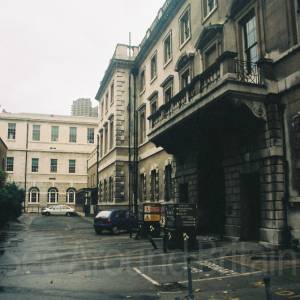
St Bartholomew's Hospital, London
237 metres*


*Distances are calculated in a straight line from the current venue, please allow extra time/distance based on available paths or roads.