

Rio de Janeiro, South America
Details
Accessibility
https://en.prefeitura.rio/?my_aiowz_update_setting=1c9587ebca&s=Accessibility
Brief description
https://en.wikipedia.org/wiki/Rio_de_Janeiro

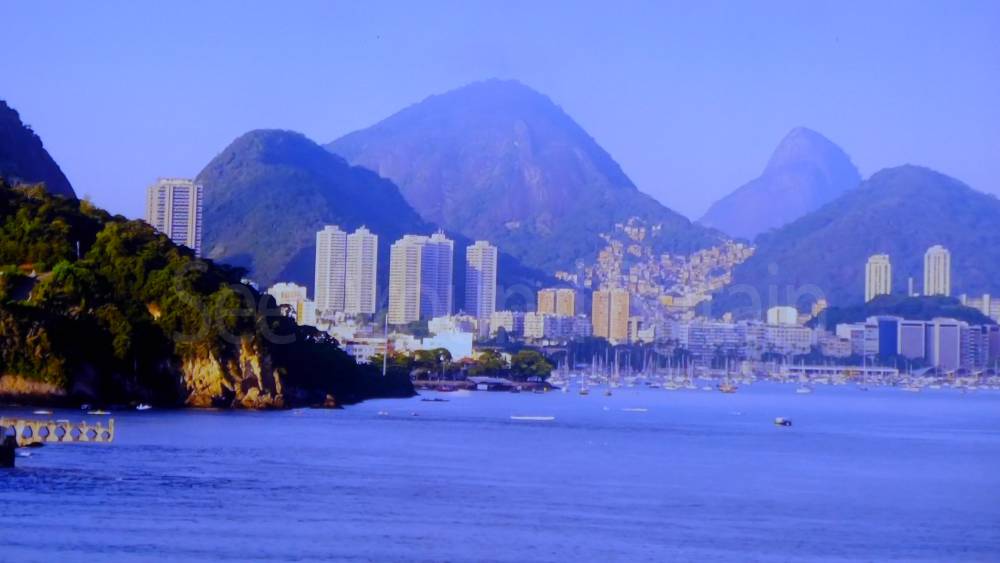
2026: "Rio de Janeiro,[a] also known simply as Rio,[8] is the capital of the state of Rio de Janeiro. It is the second-most-populous city in Brazil after São Paulo and the sixth-most-populous city in the Americas.
Founded in 1565, the city was initially the seat of the Captaincy of Rio de Janeiro, a domain of the Portuguese Empire. In 1763, it became the capital of the State of Brazil. In 1808, when the Portuguese Royal Court moved to Brazil, Rio de Janeiro became the seat of the court of Queen Maria I of Portugal. Under the leadership of her son, prince regent John of Braganza, Maria raised Brazil to the dignity of a kingdom within the United Kingdom of Portugal, Brazil, and Algarves. Rio remained as the capital of the pluricontinental monarchy until 1822, when the Brazilian War of Independence began. This is one of the few instances in history that the capital of a colonizing country officially shifted to a city in one of its colonies. Rio de Janeiro subsequently served as the capital of the Empire of Brazil, until 1889, and then the capital of republican Brazil until 1960 when the capital was moved to Brasília.
Rio de Janeiro has the second largest municipal GDP in the country,[9] and 30th-largest in the world as of 2008,[10] estimated at R$343 billion. It is home to the headquarters of major Brazilian oil, mining, and telecommunications companies, including two of the country's largest corporations, Petrobras and Vale, and Latin America's largest telemedia conglomerate, Grupo Globo. The home of many universities and institutes, it is the second-largest center of research and development in Brazil, accounting for 17 percent of national scientific output according to 2005 data.[11] Despite the perception of a high crime rate, the city actually has a lower incidence of crime than most state capitals in Brazil.[12]
Rio de Janeiro is one of the most visited cities in the Southern Hemisphere and is known for its natural settings, carnival, samba, bossa nova, and beaches such as Barra da Tijuca, Copacabana, Ipanema, and Leblon.[13] In addition to the beaches, other landmarks include the statue of Christ the Redeemer atop Corcovado mountain, named one of the New Seven Wonders of the World; Sugarloaf Mountain with its cable car; the Sambódromo, a permanent grandstand-lined parade avenue which is used during Carnival; and Maracanã Stadium, one of the world's largest football stadiums. Rio de Janeiro was the host of the 2016 Summer Olympics and Paralympics, making the city the first South American and Portuguese-speaking city to host these events, and the third time that the Olympics were held in a Southern Hemisphere city.[14] The Maracanã Stadium held the finals of the 1950 and 2014 FIFA World Cups and the 2013 FIFA Confederations Cup. The city also hosted the XV Pan American Games in 2007, and the G20 summit in 2024, and will host the FIFA Women's World Cup in 2027.[15][16] "
Address
Municipal Theater of Rio de Janeiro
Praça Floriano, S/N - Centro
Rio de Janeiro - RJ
20031-050
Brazil
+ City Hall of Rio de Janeiro Headquarters: Rua Afonso Cavalcanti, 455 - Cidade Nova - 20211-110
Phone
Website
https://visitbrasil.com/en/location/rio-de-janeiro-en/
https://www.geodyssey.co.uk/brazil/brazil-guide/rio-de-janeiro.aspx
Directions
Opening Times
Always check with the venue directly for up-to-date information including opening times and admission charges as they may be subject to change
Transport
Amenities
https://en.wikipedia.org/wiki/Rio_de_Janeiro#Culture
2026: "Rio de Janeiro is a main cultural hub in Brazil. Its architecture embraces churches and buildings dating from the 16th to the 19th centuries, blending with the world-renowned designs of the 20th century. Rio was home to the Portuguese Imperial family and capital of the country for many years, and was influenced by Portuguese, English, and French architecture.[417]
Rio de Janeiro has inherited a strong cultural role from the past. In the late 19th century, there were sessions held of the first Brazilian film and since then, several production cycles have spread out, eventually placing Rio at the forefront of experimental and national cinema. The Rio de Janeiro International Film Festival[418] has been held annually since 1999.[419]
Rio currently brings together the main production centers of Brazilian television.[420] Major international films set in Rio de Janeiro include Blame it on Rio; the James Bond film Moonraker; the Oscar award-winning, critically acclaimed Central Station by Walter Salles, who is also one of Brazil's best-known directors; and the Oscar award-winning historical drama, Black Orpheus, which depicted the early days of Carnaval in Rio de Janeiro. Internationally distributed Brazilian-made movies illustrating a darker side of Rio de Janeiro include Elite Squad and City of God.
Rio has many important cultural landmarks, such as the Biblioteca Nacional (National Library), one of the largest libraries in the world with collections totaling more than 9 million items; the Theatro Municipal; the National Museum of Fine Arts; the Carmen Miranda Museum; the Rio de Janeiro Botanical Garden; the Parque Lage; the Quinta da Boa Vista; the Imperial Square; the Brazilian Academy of Letters; the Museu de Arte Moderna do Rio de Janeiro; and the Natural History Museum.
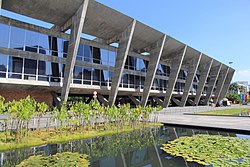
The Museum of Modern Art of Rio de Janeiro is a museum located in northeastern Flamengo Park, in the city of Rio de Janeiro"