

Sandringham House, Museum and Gardens, Norfolk




Details
Accessibility
https://sandringhamestate.co.uk/accessibility/?_
2025: Changing Places, Disability Toilets. "Registered assistance dogs are welcome inside the House, Gardens and Sandringham Church. All dogs are welcome in Sandringham Royal Park (except in the Children’s Play Area), and at the Courtyard area where facilities are they are welcome inside Sandringham Shop and Terrace Café. Sandringham Restaurant has a designated area for all dogs. Admission tickets may be purchased at the Ticket Office or online. Please be aware that there is a public road to cross to get to the entrance of the Gardens. Admission to Sandringham House and Gardens is on a timed entry basis. Carers or companions are entitled to complimentary entry."
Brief description
https://en.wikipedia.org/wiki/Sandringham_House


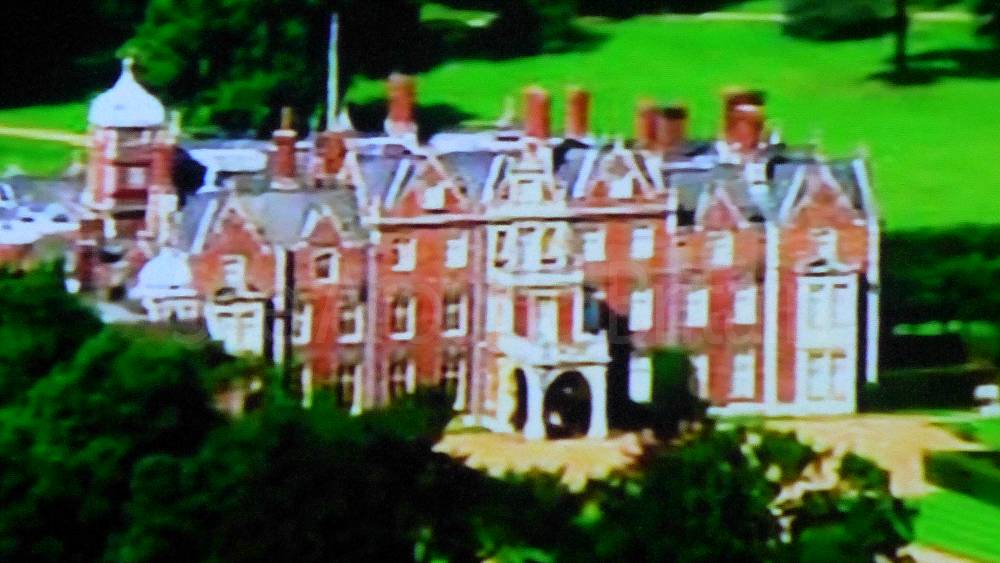
2025: "Sandringham House is a country house in the parish of Sandringham, Norfolk, England. It is one of the royal residences of Charles III, whose grandfather, George VI, and great-grandfather, George V, both died there. The house stands in a 20,000-acre (8,100 ha) estate in the Norfolk Coast Area of Outstanding Natural Beauty. The house is listed as Grade II* and the landscaped gardens, park and woodlands are on the National Register of Historic Parks and Gardens.
The site has been occupied since Elizabethan times, when a large manor house was constructed. This was replaced in 1771 by a Georgian mansion for the owners, the Hoste Henleys. In 1836 Sandringham was bought by John Motteux, a London merchant, who already owned property in Norfolk and Surrey. Motteux had no direct heir, and on his death in 1843, his entire estate was left to Charles Spencer Cowper, the son of Motteux's close friend Emily, Viscountess Palmerston. Cowper sold the Norfolk and the Surrey estates and embarked on rebuilding at Sandringham. He led an extravagant life, and by the early 1860s, the estate was mortgaged and he and his wife spent most of their time on the Continent.
In 1862, Sandringham and just under 8,000 acres (3,200 ha) of land were purchased for £220,000 for Albert Edward, Prince of Wales, later Edward VII, as a country home for him and his future wife, Princess Alexandra of Denmark. Between 1870 and 1900, the house was almost completely rebuilt in a style described by Pevsner as "frenetic Jacobean". Albert Edward also developed the estate, creating one of the finest shoots in England. Following his death in 1910, the estate passed to Edward's son and heir, George V, who described the house as "dear old Sandringham, the place I love better than anywhere else in the world".[2] It was the setting for the first royal Christmas broadcast in 1932. George died at the house on 20 January 1936. The estate passed to his son Edward VIII and, at his abdication, as the private property of the monarch, it was purchased by Edward's brother, George VI. George was as devoted to the house as his father, writing to his mother Queen Mary, "I have always been so happy here and I love the place". He died at Sandringham on 6 February 1952.
On the King's death, Sandringham passed to his daughter Elizabeth II. Elizabeth II spent about two months each winter on the Sandringham Estate, including the anniversary of her father's death and of her own accession in early February. In 1957, she broadcast her first televised Christmas message from Sandringham. In the 1960s, plans were drawn up to demolish the house and replace it with a modern building, but these were not carried out. In 1977, to mark her Silver Jubilee, Elizabeth II opened the house and grounds to the public for the first time. Unlike the royal palaces owned by the Crown, such as Buckingham Palace, Holyrood Palace and Windsor Castle, Sandringham (alongside Balmoral Castle in Scotland) is owned personally by the monarch. In 2022, following Elizabeth II's death, Sandringham passed to her son and heir, Charles III.

The Upper Lake and The Nest
The gardens and country park comprise 600 acres (240 ha) of the estate[143] with the gardens extending to 49 acres (20 ha).[144] They were predominantly laid out from the 1860s, with later alterations and simplifications. Edward VII sought advice from William Broderick Thomas and Ferdinand de Rothschild, a friend and adviser to the King throughout his life. The original lake was filled and replaced with the elaborate parterres fashionable at the time.[145] These have since been removed.[146] Two new lakes were dug further from the house, and bordered by rockeries constructed of Pulhamite stone.[147] A summerhouse, called The Nest, stands above the Upper Lake, a gift in 1913 to Queen Alexandra from the comptroller of her household, General Sir Dighton Probyn.[148][s]
The gardens to the north of the house, which are overlooked by the suite of rooms used by George VI, were remodelled and simplified by Geoffrey Jellicoe for the King and his wife after the Second World War.[149][150] A statue of Father Time, dating from the 18th century, was purchased by the Queen Mother and installed in 1951.[151][t] Further areas of the gardens were remodelled by Sir Eric Savill in the 1960s for Queen Elizabeth and Prince Philip.[155] The extensive kitchen gardens, which in Edward VII's time included carriage drives to allow guests to view the "highly ornamental" arrangements,[125][u] were also laid to lawn during Queen Elizabeth II's reign, having proved uneconomic to maintain.[157] In 2023, King Charles III developed an environmentally-friendly topiary garden with more than 5,000 yew trees, bedding and paths.[158]
.jpg) The Museum housed in the former coach house and stables
The Museum housed in the former coach house and stablesThe 20,000-acre (8,100 ha)[143] Sandringham estate has some of the finest shoots in England, and is used for royal shooting parties.[61] Covering seven villages, the estate's other main activities, aside from tourism, are arable crops and forestry.[159] The grounds provided room for Queen Alexandra's menagerie of horses, dogs, cats, and other animals.[160] In 1886 a racing pigeon loft was constructed for birds given to the Duke of York by King Leopold II of Belgium and one or more lofts for pigeons have been maintained ever since. The Norwich Gates, designed by Thomas Jeckyll[161] and made by the local firm of Barnard, Bishop and Barnard, were a wedding present for Edward and Alexandra from "the gentry of Norfolk".[29]
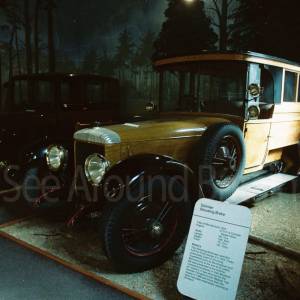
In 2007 Sandringham House and its grounds were designated a protected site under Section 128 of the Serious Organised Crime and Police Act 2005. This makes it a criminal offence to trespass in the house or its grounds.[162] The Sandringham estate has a museum in the former coach house with displays of royal life and estate history.[143] The museum also houses an extensive collection of royal motor vehicles including a 1900 Daimler owned by Edward VII and a 1939 Merryweather & Sons fire engine, made for the Sandringham fire brigade which was founded in 1865 and operated independently on the estate until 1968.[163] The coach house stables and garaging were designed by A. J. Humbert at the same time as his construction of the main house.[125] The estate contains several houses with close links to the royal family.
https://en.wikipedia.org/wiki/St_Mary_Magdalene_Church,_Sandringham


St Mary Magdalene Church, Sandringham is a Church of England parish church in Norfolk, England. It is situated next to Sandringham House, and members of the British royal family regularly attend services when in residence at Sandringham, notably at Christmas.[1] The church is dedicated to Mary Magdalene.
The church has been a place of royal worship since the reign of Queen Victoria and is noted for its ornate interior, featuring intricate wood carvings by Norwegian craftsmen. It also houses a silver altar and a pulpit presented by Queen Alexandra, reflecting its longstanding royal associations and artistic heritage.
Since 2022, the Reverend Canon Paul Williams serves as Rector of Sandringham.[2][3]
The Grade II* listed[4] church is dedicated to Mary Magdalene[5] and is described as a small building in the perpendicular style, "nobly lying on raised ground".[6][7] The present building dates from the 16th century but was restored by Samuel Sanders Teulon in 1855 and Sir Arthur Blomfield in 1890. It is considered to be a noteworthy example of a carrstone building.[8][9] The church is situated in the park and is approached from Sandringham House through the garden by "an avenue of fine old Scotch firs".[7]
Much of the decoration and the church's stained glass in the east window was designed by Charles Eamer Kempe whom King Edward VII had also commissioned in 1903 to create a stained glass window at Buckingham Palace for his eldest son, Prince Albert, Duke of Clarence.[10][11] The church's silver altar and reredos, crafted by the Parisian silversmiths Barkentin & Krall, were presented to Queen Alexandra by American department store magnate Rodman Wanamaker as a memorial tribute to Edward VII. He also presented the Queen with the silver pulpit and a silver 17th-century Spanish processional cross. Also of note are the Florentine marble font and the Greek font, dating to the 9th century.[8][12]"
https://sandringhamestate.co.uk/accessibility/?_
2025: "Sandringham Church is open whenever the House and Gardens are open to the public. There is a flight of 7 steps under the lychgate into the churchyard; to the left of the lychgate is another path which avoids the steps and goes up a gentle slope. The Church itself is fully accessible."
Address
Sandringham Estate
Sandringham
PE35 6EN
2025: "The Visitor Enterprises Department is responsible for providing information to visitors and you can get in touch as appropriate depending on the nature of your enquiry. For general enquiries relating to visiting Sandringham, please contact our Ticket Office at ticketoffice@sandringhamestate.co.uk or call 01485 544112. For group enquiries, please contact the Visitor Enterprises Administrator at group.bookings@sandringhamestate.co.uk or call 01485 545408. Should you wish to write, the address is: Visitor Enterprises Department, Estate Office, Sandringham, Norfolk. PE35 6EN."
Phone
Website
https://sandringhamestate.co.uk/plan-your-visit/opening-times
2025: "The country park and the visitors' centre are normally open throughout the year. The house, gardens and museum were usually opened annually from the end of March until the end of October,[186] but COVID-19 led to the closure of much of the estate. Staged re-opening took place from February 2022.[187] Following the death of Elizabeth II, Sandringham was closed for a period of official mourning.[188] The country park subsequently reopened, but the house and garden remained closed to the public until April 2023.[189] "
Directions
Opening Times
Always check with the venue directly for up-to-date information including opening times and admission charges as they may be subject to change
https://sandringhamestate.co.uk/plan-your-visit/opening-times
Transport
Amenities
https://sandringhamestate.co.uk/accessibility/?_
2025: "Registered assistance dogs are welcome inside the House, Gardens and Sandringham Church. All dogs are welcome in Sandringham Royal Park (except in the Children’s Play Area), and at the Courtyard area where facilities are they are welcome inside Sandringham Shop and Terrace Café. Sandringham Restaurant has a designated area for all dogs. Admission tickets may be purchased at the Ticket Office or online. Please be aware that there is a public road to cross to get to the entrance of the Gardens. Admission to Sandringham House and Gardens is on a timed entry basis. Carers or companions are entitled to complimentary entry."
Sandringham Stables Tearoom
Sandringham
PE35 6EE
+ Sandringham Restaurant
Norfolk
Sandringham
PE35 6EN
+ Sandringham Parking
Unnamed Road
Sandringham
PE35 6EJ
+ St Mary Magdalene Church
Sandringham
PE35 6EH
Travel Information
For further travel information please see: www.traveline.info
Or call Traveline on 0871 200 22 33
(Calls cost 12p per minute plus your phone company's access charge)
Location
Nearest Venues

Park House Hotel, King's Lynn, Norfolk
526 metres*

1,041 metres*

Appleton Water Tower, Sandringham, Norfolk
1,442 metres*

St Mary Ruins, Appleton, Norfolk
1.15 miles*

Dersingham Library. Open hours vary. Free entry.
1.20 miles*
*Distances are calculated in a straight line from the current venue, please allow extra time/distance based on available paths or roads.