

Tokyo, officially the Tokyo Metropolis, is the capital and most populous city of Japan, Asia.
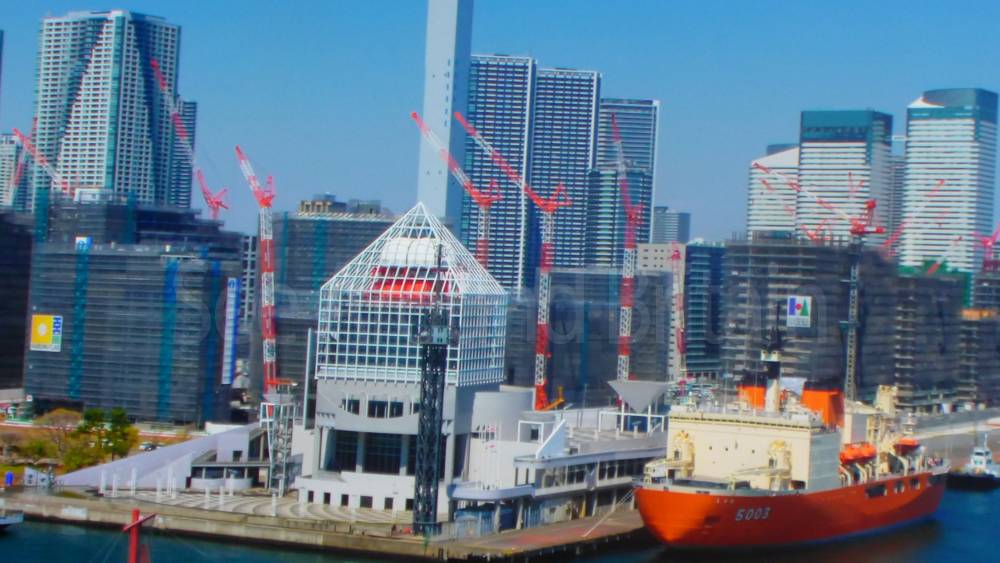
Details
Accessibility
https://www.english.metro.tokyo.lg.jp/search?keyword=Accessibility
https://www.gotokyo.org/en/plan/accessibility/index.html
https://www.tcvb.or.jp/en/accessibletourism/
Brief description
https://en.wikipedia.org/wiki/Tokyo
2026: "Tokyo,[a] officially the Tokyo Metropolis,[b] is the capital and most populous city of Japan. With a population of over 14 million in the city proper in 2023, it is one of the most populous urban areas in the world. The Greater Tokyo Area, which includes Tokyo and parts of six neighboring prefectures, is the most populous metropolitan area in the world, with 41 million residents as of 2024.
Lying at the head of Tokyo Bay, Tokyo is part of the Kantō region, on the central coast of Honshu, Japan's largest island. It is Japan's economic center and the seat of the Japanese government and the Emperor of Japan. The Tokyo Metropolitan Government administers Tokyo's central 23 special wards, which formerly made up Tokyo City; various commuter towns and suburbs in its western area; and two outlying island chains, the Tokyo Islands. Although most of the world recognizes Tokyo as a city, since 1943 its governing structure has been more akin to that of a prefecture, with an accompanying Governor and Assembly taking precedence over the smaller municipal governments that make up the metropolis. Special wards in Tokyo include Chiyoda, the site of the National Diet Building and the Tokyo Imperial Palace; Shinjuku, the city's administrative center; and Shibuya, a hub of commerce and business.
Tokyo, originally known as Edo, rose to political prominence in 1603 when it became the seat of the Tokugawa shogunate, and by the mid-18th century, Edo had evolved from a small fishing village into one of the largest cities in the world, with a population surpassing one million. After the Meiji Restoration (1868), the imperial capital in Kyoto was moved to Edo, and the city was renamed Tokyo (lit. 'Eastern Capital'). Tokyo was greatly damaged by the 1923 Great Kantō earthquake and by allied bombing raids during World War II. Beginning in the late 1940s, Tokyo underwent rapid reconstruction and expansion, which fueled the Japanese economic miracle, in which Japan's economy became the second-largest in the world at the time, behind that of the United States.[10] As of 2025, Tokyo is home to 26 of the world's 500 largest companies, as listed in the annual Fortune Global 500.[11]
Tokyo was the first city in Asia to host the Summer Olympics and Paralympics, in 1964, and also hosted in 2021. It hosted three G7 summits, in 1979, 1986, and 1993. Tokyo is an international hub of research and development and an academic center, with several major universities, including the University of Tokyo, the top-ranking university in Japan.[12][13] Tokyo Station is the central hub for the Shinkansen, the country's high-speed railway network, and the city's Shinjuku Station is the world's busiest train station. Tokyo Skytree is the world's tallest tower.[14] The Tokyo Metro Ginza Line, which opened in 1927, is the oldest underground metro line in Asia.[15]
Tokyo's nominal gross domestic output was 120.2 trillion yen (US$887.9 billion) in FY2022 and accounted for 21.2% of Japan's economic output, which converts to 8.43 million yen or US$62,291 per capita.[16] Including the Greater Tokyo Area, Tokyo is the second-largest metropolitan economy in the world after New York, with a 2022 gross metropolitan product estimated at US$2.08 trillion.[17] Although Tokyo's status as a leading global financial hub has diminished with the Lost Decades since the 1990s, when the Tokyo Stock Exchange (TSE) was the world's largest, with a market capitalization about 1.5 times that of the NYSE,[18] Tokyo is still a leading financial hub, and the TSE remains among the world's top five major stock exchanges.[19] Tokyo is categorized as an Alpha+ city by the Globalization and World Cities Research Network. It ranked 14th in the 2024 edition of the Global Livability Ranking,[20] and has been ranked as the safest city in the world by the Economist Intelligence Unit.[21][22][23][24][25] "
Address
Imperial Palace
1-1 Chiyoda
Chiyoda City, Tokyo 100-8111
Japan
+ Tokyo Convention & Visitors Bureau
Address: Shinjuku Monolith 15F.
2-3-1 Nishi-Shinjuku, Shinjuku-ku, Tokyo 163-0915
Phone
Website
https://www.english.metro.tokyo.lg.jp/
https://www.gotokyo.org/en/index.html
Directions
https://en.wikipedia.org/wiki/Tokyo#Transportation
2026: "Tokyo has the lowest car ownership rate among all prefectures in Japan, with 0.416 cars per household compared to the national average of 1.025 per household. This is despite Tokyo being one of the most affluent areas in the country, with a nominal GDP per capita of around US$62,000.[192] A 2021 survey found that 81% of respondents without a car were satisfied with public transport and saw no need to own one.[193]
Each road in Tokyo falls into one of the following categories depending on the type of ownership: private roads, municipal roads, metropolitan roads, and expressways. As of April 1, 2022, the total length of roads in Tokyo is approximately 24,741 km (including 2,370 km of metropolitan roads), with a total area of approximately 190.31 km2 (including 46.30 km2 of metropolitan roads).[194] Intercity expressways in and around Tokyo are managed by NEXCO East, while expressways that serve only within the Greater Tokyo Area (Shuto Expressway) are operated by the Metropolitan Expressway Company. Tolls are collected based on the distance travelled. The total length of the Shuto Expressway is 337.8 km, with speed limits usually set at 80 km/h or 60 km/h to reduce noise pollution and accommodate the relatively winding road shapes.[195] "
Opening Times
Always check with the venue directly for up-to-date information including opening times and admission charges as they may be subject to change
Transport
https://en.wikipedia.org/wiki/Tokyo#Transportation
2026: "Tokyo, which is the center of the Greater Tokyo Area, is Japan's largest domestic and international hub for rail and ground transportation. Public transportation within Tokyo is dominated by an extensive network of "clean and efficient"[183] trains and subways run by a variety of operators, with buses, monorails and trams playing a secondary feeder role. There are up to 62 electric train lines and more than 900 train stations in Tokyo.[184] Shibuya Crossing is the "world's busiest pedestrian crossing", with around 3,000 people crossing at a time.[185][186][187]
Rail


Rail is the primary mode of transportation in Tokyo,[188] which has the most extensive urban railway network in the world and an equally extensive network of surface lines. JR East operates Tokyo's largest railway network, including the Yamanote Line loop that circles central Tokyo. It operates rail lines throughout the entire metropolitan area of Tokyo and the rest of northeastern Honshu. JR East is also responsible for the Shinkansen high-speed rail lines that link Tokyo and the Northeastern cities of Japan (Joetsu Shinkansen, Tohoku/Hokkaido Shinkansen, Yamagata Shinkansen, Akita Shinkansen, Hokuriku Shinkansen).[189] The Tokaido Shinkansen, which links Tokyo and Osaka via Nagoya and Kyoto, as well as western cities beyond, is operated by JR Central. The Chuo Shinkansen, the first-ever long-distance high-speed floating maglev line currently under construction, will also be operated by JR Central. Both JR companies were created from the privatization of Japan National Railways in 1987. JR Freight does not own any part of the railway network but operates freight trains on the JR network. Two different entities operate Tokyo's underground railway network: the privatized Tokyo Metro, which operates Tokyo Metro lines, and the governmental Tokyo Metropolitan Bureau of Transportation, which operates Toei lines. Tokyo Metro is entirely owned by the Japanese Government and the Tokyo Metropolitan Government since it was privatized in 2004 (it was previously a public entity called the Imperial Capital Rapid Transit Authority from 1941 to 2004), but it is scheduled to go public in 2024.[190] Other major railway operators in Tokyo include Odakyu, Tokyu, Keio, Seibu, Tobu, and Keisei. Although each operator directly owns its railway lines, services that travel across different lines owned by different operators are common.
Tokyo once had an extensive tram network, with a total distance of 213 km (Tokyo Toden). However, similar to other major cities worldwide, the age of motorization since the 1950s has made it considered unfit to share busy roads with cars. Today, only one line, the Arakawa line, remains.[191] "
Amenities
https://en.wikipedia.org/wiki/Tokyo#Culture
2026: "Tokyo is home to a wide array of museums, art galleries, and libraries, catering to various interests. Ueno Park has the Tokyo National Museum, the country's largest museum specializing in traditional Japanese art,[218] the National Museum of Western Art, whose building designed by Le Corbusier is a world heritage site,[219] and the National Museum of Nature and Science. Ueno Zoo is also located within the park, near the Shinobazu Pond. It is famous for being one of the three zoos in Japan to have giant pandas, with a population of 4 as of May 2024.[220] Other notable museums include the Artizon Museum in Chūō, the National Museum of Emerging Science and Innovation in Odaiba, and the Edo-Tokyo Museum in Sumida, which provides insights into the history and culture of Tokyo. The Edo-Tokyo Open Air Architectural Museum preserves various buildings that have existed throughout the history of Tokyo. The Nezu Museum in Aoyama has a collection of pre-modern Japanese and East Asian art. Located near the Imperial Palace, the National Diet Library, the National Archives, and the National Museum of Modern Art are also notable cultural institutions. Additionally, the Mori Art Museum in Roppongi and the Sumida Hokusai Museum in Sumida ward are notable for their contemporary and ukiyo-e art collections, respectively. The Sompo Museum of Art in Shinjuku is best known for owning one of Van Gogh's Sunflowers. The Tokyo Metropolitan Garden Art Museum in Minato features the former Tokyo House of Yasuhiko, Prince Asaka, which was built in an opulent Art Deco style in 1933. The Railway Museum, which used to be located in Kanda, has relocated to a larger site in Omiya, Saitama and stores 42 train carriages and locomotives of historical importance.[221] The Tobacco and Salt Museum in Sumida has one of the world's most extensive collections of different types of tobacco and salt. Major aquariums in Tokyo include: Shinagawa Aquarium, Tokyo Sea Life Park, Sunshine Aquarium and Sumida Aquarium.
Leisure and entertainment
 Kabukicho, a nightlife district in Shinjuku
Tokyo offers a diverse array of leisure and entertainment options. The city is home to numerous theatres. The National Noh Theatre and Kabuki-za are dedicated to traditional Japanese plays. The New National Theatre Tokyo in Shibuya serves as a central venue for opera, ballet, contemporary dance, and drama.[222] Other major play and concert venues include: the National Theatre of Japan, the Imperial Theatre, the Meiji-za, the NHK Hall, the Tokyo Metropolitan Theatre, Tokyo Opera City and the Tokyo International Forum. Two sports venues, the Nippon Budokan and the Tokyo Dome, are usually used to host concerts by popular pop artists.[223]
The nightlife district of Tokyo is centered around areas in the west of the city, such as Shibuya, Shinjuku, and Roppongi, with a high concentration of bars, clubs, host and hostess clubs, and live music venues.[224] Tokyo is also known for its festivals, such as the Sannō Matsuri at Hie Shrine, the Sanja Festival at Asakusa Shrine, and the biennial Kanda Matsuri, which features parades with elaborately decorated floats. Harajuku, located in Shibuya, is internationally famous for its youth fashion and street culture, with trendy shops, cafes, and Takeshita Street.[225] Akihabara, known as "Electric Town", is a hub for electronics and otaku culture such as anime and computer games, with numerous shops selling anime, manga, and gaming merchandise.[226] Ginza and Nihombashi are two of Tokyo's most notable shopping districts. Ginza is known for its high-end shopping, featuring luxury brand stores, boutique shops, and department stores such as Mitsukoshi and Wako. It is also home to numerous fine dining places and art galleries, making it a cultural and commercial hub. Nihombashi, historically a center of commerce, has long-established shops and the Mitsukoshi department flagship store, Japan's first department store, founded in 1673.[227] Jinbōchō is known for its concentration of bookstores, publishing houses, and literary cafes, and its links to a large number of famous literary figures.[228]
Modern attractions in Tokyo include the Tokyo Skytree in Sumida, the tallest structure in Japan, which provides panoramic views of the city from its observation decks. Odaiba, a man-made island in Tokyo Bay, features shopping, dining, and entertainment attractions such as the teamLab Planets digital art museum and Joypolis indoor amusement park.[229] The Tokyo Disney Resort and its two theme parks Tokyo Disneyland and Tokyo DisneySea are major destinations for family entertainment. Although these Disney theme parks bear the name Tokyo, they are located in nearby Urayasu, Chiba, just east of Tokyo."