

White Castle, Monmouthshire NP7 8UD. Free entry


Details
Accessibility
"Access is via a short gravelled path from a limited parking area. The main part of the castle is accessed via a bridge, crossing the water filled moat from the larger outer ward, which itself is reached via a small bridge, crossing a dry moat.
Mobility access is good to most areas." Parking for approx. 4 vehicles available. There is no dedicated disabled parking.
Brief description
"The shape of things to come? An early glimpse of Edward I’s Welsh castle-building project
White Castle is the best preserved and most imposing of the trio of Monmouthshire fortresses known as the ‘Three Castles’ – which includes Grosmont and Skenfrith – built to control the border. Originally constructed from wood and earth, a series of renovations transformed it into the significant defensive structure we see today. Its medieval name might derive from the white rendering used on its masonry. The large outer ward is as big as a football pitch, while the pear-shaped inner ward sits behind a deep, steep-sided, water-filled moat.
Many of these features are thought to be the work of the Lord Edward (later King Edward I) who took possession of the Three Castles in 1254. The modifications at White Castle, his first Welsh castle, can be seen as a forerunner of the mighty fortresses he would go on to build in north Wales.
Parking is located directly outside the site. Passing through the main gate and following the path you will arrive at a small bridge that will take you through into the outer grassed ward. Surrounded by ruinous walls, there is always the risk of falling stone. We ask that you do no climb any of the stonework here, or within the monument.
A short set of steps at the rear of the outer ward will take you down to the lower moat level, this area may be overgrown and grounding uneven / muddy. We ask that you remain vigilant to your surroundings within this space.
Leading from the outer ward, the main bridge will take you over the moat and into the monument. The monument is relatively flat, however, there may be some ruinous low stonework.
As with all ancient monuments there is always a risk of stones being dislodged in bad weather, however, we manage this through extensive monitoring.
Climbing may result in serious injury.
There are several wild plants and flowers, although these are great pollinators, they may be poisonous to visitors and animals, we strongly advise you not to touch or allow dogs to eat any vegetation."
+ https://en.wikipedia.org/wiki/White_Castle,_Monmouthshire
2026: "White Castle (Welsh: Castell Gwyn), also known historically as Llantilio Castle, is a ruined castle near the village of Llantilio Crossenny in Monmouthshire, Wales. The fortification was established by the Normans in the wake of the invasion of England in 1066, to protect the route from Wales to Hereford. Possibly commissioned by William fitz Osbern, the Earl of Hereford, it comprised three large earthworks with timber defences. In 1135, a major Welsh revolt took place and in response King Stephen brought together White Castle and its sister fortifications of Grosmont and Skenfrith to form a lordship known as the "Three Castles", which continued to play a role in defending the region from Welsh attack for several centuries.
King John gave the castle to a powerful royal official, Hubert de Burgh, in 1201. Over the next few decades, it passed back and forth between several owners, as Hubert, the rival de Braose family, and the Crown took control of the property. During this period, White Castle was substantially rebuilt, with stone curtain walls, mural towers and gatehouses, forming what the historian Paul Remfry considers to be "a masterpiece of military engineering".[2] In 1267 it was granted to Edmund, the Earl of Lancaster, and remained in the hands of the earldom, and later duchy, of Lancaster until 1825.
Edward I's conquest of Wales in 1282 removed much of White Castle's military utility, and by the 16th century it had fallen into disuse and ruin. The castle was placed into the care of the state in 1922, and is now managed by Cadw, the Welsh heritage agency."
Address
White Castle, Abergavenny NP7 8UD
Phone
Website
https://cadw.gov.wales/visit/places-to-visit/white-castle
Directions
Parking for approx. 4 vehicles available. There is no dedicated disabled parking. Bike storage area available in car park or close to site.
Postcode NP7 8UD
what3words: ///link.whom.parked
Opening Times
Always check with the venue directly for up-to-date information including opening times and admission charges as they may be subject to change
2026: "1st April - 31st March10am–4pm Last admission 30 minutes before closing. Closed 24, 25, 26 December and 1 January"
Transport
For further travel information in Wales please see: www.traveline.cymru/travel-info
Or call Traveline Cymru on 0800 464 0000
Amenities
White Castle car park, Abergavenny NP7 8UD
Dogs on leads welcome to access ground floor levels of the site.
Picnic benches and /or tables are available for visitor use.
This site is available to hire for events, filming and exhibitions.
Cadw holiday accommodation is available to hire close to this site. https://cadw.gov.wales/visit/places-to-visit/cadw-holiday-accommodation/crown-cottage
Travel Information
For further travel information in Wales please see: www.traveline.cymru/travel-info
Or call Traveline Cymru on 0800 464 0000
Location
Nearest Venues

Hogs Head Public House, Great Treadam, Abergavenny
1,265 metres*

St James the Elder, Llanvetherine, Monmouth
1,581 metres*
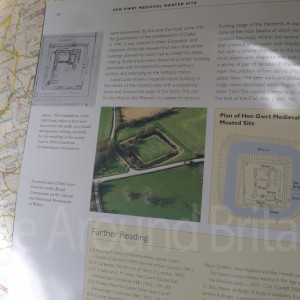

St Teilo's Church, Llantilio Crossenny
1.63 miles*

St Mabli's Church, Llanvapley, Abergavenny
1.85 miles*
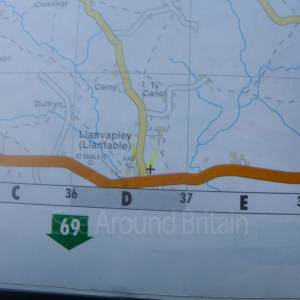
1.92 miles*
*Distances are calculated in a straight line from the current venue, please allow extra time/distance based on available paths or roads.