

Naples
Details
Accessibility
https://www.comune.napoli.it/argomento/assistenza-agli-invalidi/
Assistance for the disabled:
Topic Details
Municipal services, documents, offices, news, and events related to Disability Assistance.
Disabled Permit Release:
The disabled parking and circulation permit is issued to people with significantly reduced walking ability and to people with visual impairments.
Brief description
https://en.wikipedia.org/wiki/Naples


 Historic Centre of Naples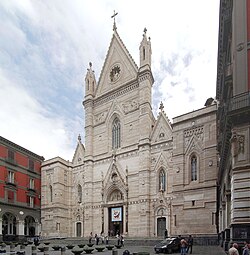
Cathedral
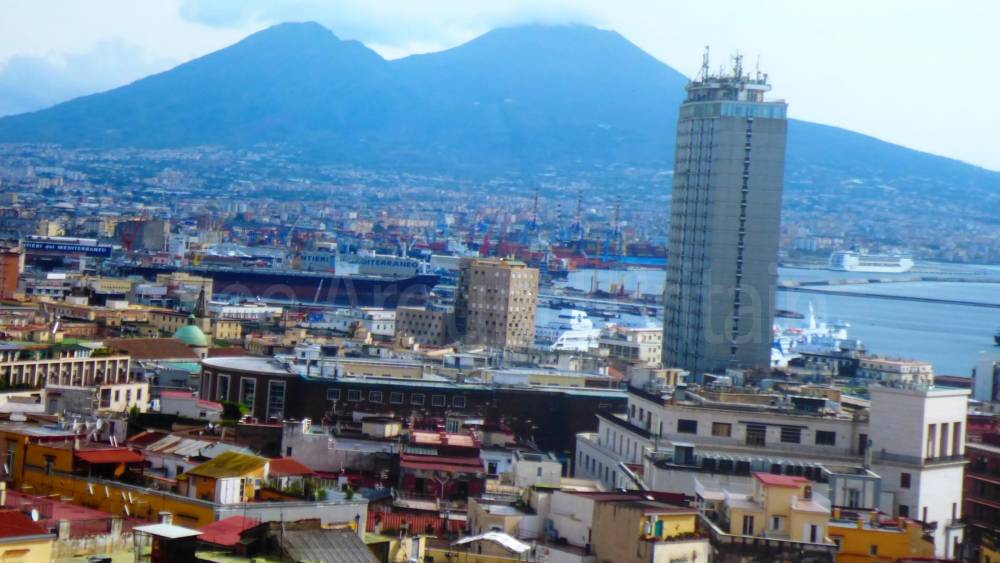
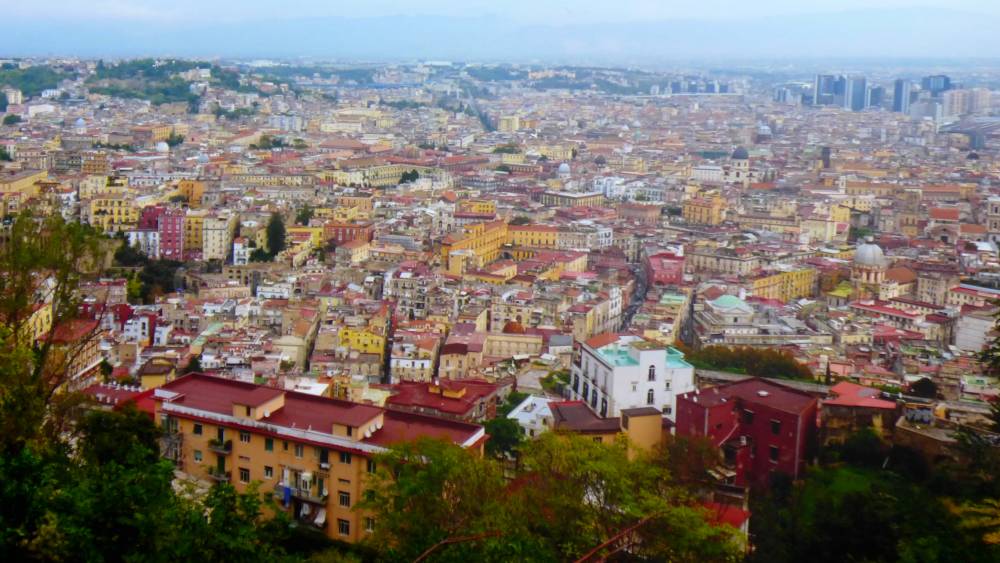
2026: "Naples[b] is the regional capital of Campania, Italy. With a population of 908,082 within the city's administrative limits (as of 2025), it is the largest city in southern Italy and the third-largest city of Italy after Rome and Milan,[3] while its province-level municipality is the third most populous metropolitan city in Italy with a population of 2,958,410 residents.[2] Its metropolitan area, the seventh most populous in the European Union,[4] stretches beyond the boundaries of the city wall for approximately 30 kilometres (20 miles). Naples also plays a key role in international diplomacy, since it is home to NATO's Allied Joint Force Command Naples[5] and the Parliamentary Assembly of the Mediterranean.
Naples served as the capital of the Duchy of Naples (661–1139), subsequently as the capital of the Kingdom of Naples (1282–1816), and finally as the capital of the Kingdom of the Two Sicilies — until the unification of Italy in 1861. Naples is also considered a capital of the Baroque, beginning with the artist Caravaggio's career in the 17th century and the artistic revolution he inspired.[8] It was also an important centre of humanism and Enlightenment.[9][10] The city has long been a global point of reference for classical music and opera through the Neapolitan School.[11] Between 1925 and 1936, Naples was expanded and upgraded by the Fascist regime. During the later years of World War II, it sustained severe damage from Allied bombing as they invaded the peninsula. The Four Days of Naples (Italian: Quattro giornate di Napoli) was an uprising in Naples, Italy, against Nazi German occupation forces from 27 September to 30 September 1943, immediately prior to the arrival of Allied forces in Naples on 1 October during World War II. The city underwent extensive reconstruction work after the war.[12]
Since the late 20th century, Naples has had significant economic growth, helped by the construction of the Centro direzionale business district and an advanced transportation network, which includes the Alta Velocità high-speed rail link to Rome and Salerno and an expanded subway network and suburban railway service. Naples is the third-largest urban economy in Italy by GDP, after Milan and Rome.[13] The Port of Naples is one of the most important in Europe.
Naples's historic city centre has been designated as a UNESCO World Heritage Site. A wide range of culturally and historically significant sites are nearby, including the Royal Palace of Caserta and the Roman ruins of Pompeii and Herculaneum. Naples is undoubtedly one of the world's cities with the highest density of cultural, artistic, and monumental resources, described by the BBC as "the Italian city with too much history to handle."[14][15]
The city has long been a global point of reference for classical music and opera through the Neapolitan School, contributing to the development of opera buffa[16] and the modern conservatory system.[17] Naples has also fostered a distinctive theatrical tradition and a renowned musical heritage, including the Neapolitan song (Canzone napoletana), which achieved worldwide popularity. In the visual arts, the city has given rise to original artistic movements such as the Neapolitan Renaissance [it][18] and Baroque [it],[19] Caravaggism,[20] the School of Posillipo,[21] the School of Resina and Neapolitan Liberty [it][22] (Art Nouveau), as well as internationally significant applied arts, including Capodimonte porcelain[23] and the Neapolitan nativity scene ("presepe").[24]
It is also widely recognised for its distinctive culinary tradition,[25] which includes foods that have become global cultural icons, most notably pizza.[26] In recognition of its cultural significance, the art of Neapolitan pizzaiolo has been inscribed on UNESCO's Representative List of the Intangible Cultural Heritage of Humanity.[27]
Naples is home to some of the oldest and most prestigious educational institutions in Europe. It hosts the University of Naples Federico II, founded in 1224 and regarded as the oldest state-funded and secular university in the world,[28] as well as the University of Naples "L'Orientale", the oldest institution in Europe dedicated to Oriental and Sinological studies.[29] The city is also home to the Nunziatella Military School, one of the oldest and most prestigious military academies in the world.[30][31]"
Address
https://portalecittadino.comune.napoli.it/s/richiesta-assistenza
Phone
Municipality of Naples
Palazzo San Giacomo, Piazza Municipio, 80133
01207 650639
Website
Directions
Opening Times
Always check with the venue directly for up-to-date information including opening times and admission charges as they may be subject to change
Transport
Amenities
Museo Archeologico Nazionale di Napoli
Piazza Museo, 19
80135 Napoli NA
Italy
+ Donnaregina Contemporary Art Museum - Madre Museum
Via Luigi Settembrini, 79
80139 Napoli NA
Italy
+ Duomo di Santa Maria Assunta
Via Duomo, 147
80138 Napoli NA
Italy
Location
Nearest Venues
*Distances are calculated in a straight line from the current venue, please allow extra time/distance based on available paths or roads.