

Nice, France, Europe
Details
Accessibility
https://www.explorenicecotedazur.com/en/practical-information/useful-information/
https://www.explorenicecotedazur.com/en/practical-information/getting-around/
Brief description
https://en.wikipedia.org/wiki/Nice


Cathedral Russian Church
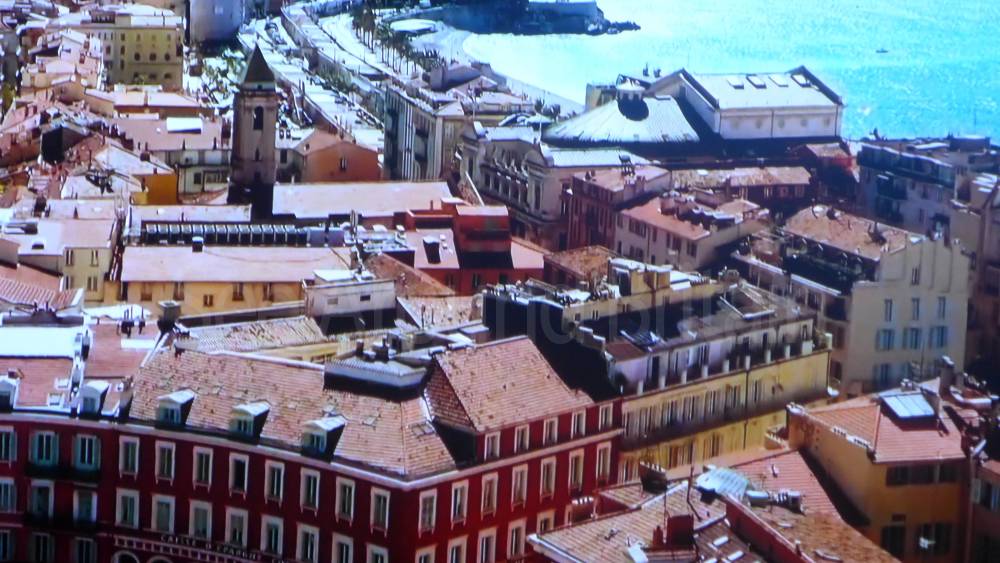
2025: "Nice[a] (/niːs/ NEESS; French pronunciation: [nis] ⓘ) is a French city located in the prefecture of the Alpes-Maritimes department. The Nice agglomeration extends far beyond the administrative city limits, with a population of nearly one million[4][2] on an area of 744 km2 (287 sq mi).[2] Located on the French Riviera, the southeastern coast of France on the Mediterranean Sea, at the foot of the French Alps, Nice is the second-largest French city on the Mediterranean coast and second-largest city in the Provence-Alpes-Côte d'Azur region after Marseille. Nice is approximately 13 kilometres (8 mi) from the principality of Monaco and 30 kilometres (19 mi) from the French–Italian border. Nice's airport serves as a gateway to the region.
The city is nicknamed Nice la Belle (Nissa La Bella in Niçard), meaning 'Nice the Beautiful', which is also the title of the unofficial anthem of Nice, written by Menica Rondelly in 1912. The area of today's Nice contains Terra Amata, an archaeological site which displays evidence of a very early use of fire 380,000 years ago. Around 350 BC, Greeks of Marseille founded a permanent settlement and called it Nikaia, after Nike, the goddess of victory.[5] Through the ages, the town has changed hands many times. Its strategic location and port significantly contributed to its maritime strength. From 1388, it was a dominion of Savoy, then became part of the French First Republic between 1792 and 1815, when it was returned to the Kingdom of Piedmont-Sardinia, the legal predecessor of the Kingdom of Italy, until its annexation by France in 1860.
The natural environment of the Nice area and its mild Mediterranean climate came to the attention of the English upper classes in the second half of the 18th century, when an increasing number of aristocratic families began spending their winters there. In 1931, following its refurbishment, the city's main seaside promenade, the Promenade des Anglais ("Walkway of the English"), was inaugurated by Prince Arthur, Duke of Connaught; it owes its name to visitors to the resort.[6] These included Queen Victoria along with her son Edward VII who spent winters there, as well as Henry Cavendish, born in Nice, who discovered hydrogen.
The clear air and soft light have particularly appealed to notable painters, such as Marc Chagall, Henri Matisse, Niki de Saint Phalle, and Arman. Their work is commemorated in many of the city's museums, including Musée Marc Chagall, Musée Matisse and Musée des Beaux-Arts.[7] International writers have also been attracted and inspired by the city. Frank Harris wrote several books, including his autobiography My Life and Loves, in Nice. Friedrich Nietzsche spent six consecutive winters in Nice, and wrote Thus Spoke Zarathustra there. Additionally, Russian writer Anton Chekhov completed his play Three Sisters while living in Nice.
Nice's appeal extended to the Russian upper classes. Prince Nicholas Alexandrovich, heir apparent to Imperial Russia, died in Nice and was a patron of the Russian Orthodox Cemetery, Nice where Princess Catherine Dolgorukova, morganatic wife of the Tsar Alexander II of Russia, is buried. Also buried there are General Dmitry Shcherbachev and General Nikolai Yudenich, leaders of the anti-Communist White Movement.
Those interred at the Cimetière du Château include celebrated jeweler Alfred Van Cleef, Emil Jellinek-Mercedes, founder of the Mercedes car company, film director Louis Feuillade, poet Agathe-Sophie Sasserno, dancer Carolina Otero, Asterix comics creator René Goscinny, The Phantom of the Opera author Gaston Leroux, French prime minister Léon Gambetta, and the first president of the International Court of Justice José Gustavo Guerrero.
Because of its historical importance as a winter resort town for the European aristocracy and the resulting mix of cultures found in the city, UNESCO proclaimed Nice a World Heritage Site in 2021.[8] The city has the second largest hotel capacity in the country,[9] and it is the second most visited metropolis in Metropolitan France, receiving four million tourists every year.[10] It also has the third busiest airport in France, after the two main Parisian ones.[11] It is the historical capital city of the County of Nice (French: Comté de Nice, Niçard: Countèa de Nissa).[12] Nice will be the main venue for the 2030 Winter Olympics."
Address
Basilique Notre-Dame de l’Assomption
2 Rue d'Italie
06000 Nice
France
+ Théâtre de la Cité
3 Rue Paganini
06000 Nice
France
https://www.explorenicecotedazur.com/en/practical-information/contact-us/
https://www.seenice.com/contact-us
Phone
Website
https://www.france.fr/en/destination/nice/
https://en.wikipedia.org/wiki/Nice
Directions
Opening Times
Always check with the venue directly for up-to-date information including opening times and admission charges as they may be subject to change
https://www.explorenicecotedazur.com/en/practical-information/useful-information/
Transport
https://www.explorenicecotedazur.com/en/practical-information/getting-around/
Amenities
https://www.youtube.com/watch?v=vK97h_gbt7Q
Location
Nearest Venues
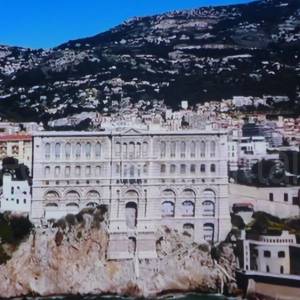
The Principality of Monaco, Europe
7.68 miles*
15.98 miles*
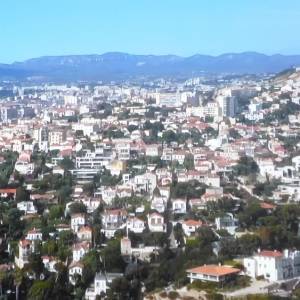
Marseille, a port city in southern France, Europe
99.33 miles*
*Distances are calculated in a straight line from the current venue, please allow extra time/distance based on available paths or roads.